Table of Contents
ToggleVitrectomy: What you need to know
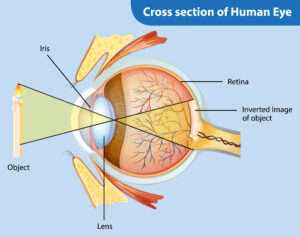
Vitrectomy is a specialised eye surgery performed to treat a range of disorders affecting the retina and vitreous — the gel-like substance that fills the space between the lens and the retina. This procedure plays a vital role in restoring vision, preventing blindness, and improving quality of life for people with serious eye conditions.
If you or someone you know has been advised to undergo a vitrectomy, understanding the process in detail can help ease concerns and set realistic expectations.
What is a vitrectomy?
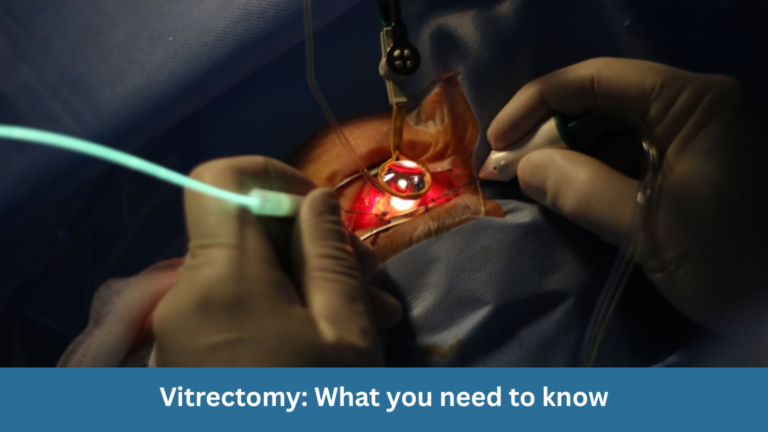
A vitrectomy is a surgical procedure in which the vitreous body inside the eye is removed and replaced with a saline solution, gas bubble, or silicone oil. By clearing out the vitreous, surgeons can directly access the retina and repair underlying problems such as retinal detachment, macular holes, or bleeding inside the eye.
Symptoms of conditions that may require a vitrectomy
Certain symptoms and their associated conditions may indicate the need for a vitrectomy, especially when other treatments have not provided relief. Patients experiencing any of the following should seek urgent assessment from an ophthalmologist or retina specialist:
- Sudden floaters and flashes of light
- Dark spots, cobweb-like shadows, or brief flashes of light may appear in your vision.
- These symptoms often signal a retinal tear or detachment, which requires prompt attention to prevent permanent vision loss.
- Dark spots, cobweb-like shadows, or brief flashes of light may appear in your vision.
- Blurred or distorted central vision
- Difficulty focusing on fine details or seeing wavy, distorted lines can indicate macular damage or retinal issues.
- Early detection is important for preserving sharp central vision.
- Difficulty focusing on fine details or seeing wavy, distorted lines can indicate macular damage or retinal issues.
- Loss of peripheral (side) vision
- A gradual or sudden reduction in side vision may be a warning of retinal detachment.
- Immediate evaluation is crucial to prevent progression.
- A gradual or sudden reduction in side vision may be a warning of retinal detachment.
- Shadows or curtains over vision
- Experiencing a dark curtain or shadow moving across your sight is a classic sign of retinal detachment.
- This symptom often requires urgent surgical intervention.
- Experiencing a dark curtain or shadow moving across your sight is a classic sign of retinal detachment.
- Sudden severe vision loss
- Rapid decline in eyesight can result from serious retinal conditions, including macular holes, vitreous hemorrhage, or retinal detachment.
- Early treatment significantly improves the chances of restoring vision.
- Rapid decline in eyesight can result from serious retinal conditions, including macular holes, vitreous hemorrhage, or retinal detachment.
- Persistent eye bleeding (vitreous haemorrhage)
- Ongoing bleeding inside the eye can cloud or block vision.
- Common causes include diabetic retinopathy, trauma, or abnormal blood vessels, and surgical removal may be necessary.
- Ongoing bleeding inside the eye can cloud or block vision.
If you notice these symptoms, an ophthalmologist should evaluate your condition immediately.
Conditions associated with vitrectomies
Vitrectomy is rarely the first-line treatment and is generally considered only when other therapies fail or when serious eye conditions threaten vision. Some common causes include:
Retinal detachment
- Occurs when the retina separates from the back of the eye.
- Symptoms can include sudden vision loss, flashes of light, or shadows.
- Occurs when the retina separates from the back of the eye.
- If left untreated, it can result in permanent blindness.
Macular hole
- A small break in the macula, the central part of the retina responsible for detailed vision.
- Can cause blurred or distorted central vision, making reading or fine work difficult.
Vitreous haemorrhage
- Bleeding into the vitreous gel, often associated with diabetic retinopathy, eye trauma, or abnormal blood vessels.
- Can obscure vision and often requires surgical removal.
Epiretinal membrane
- Scar tissue forming on the surface of the retina can distort vision and sometimes cause double vision.
- Vitrectomy can remove this membrane and improve visual clarity.
Advanced diabetic eye disease
- In proliferative diabetic retinopathy, fragile new blood vessels can bleed or pull on the retina, leading to detachment.
- Surgery helps prevent further vision loss.
Severe eye infections or trauma
- Conditions such as endophthalmitis (a serious eye infection) or traumatic injury can damage the vitreous or retina.
- Vitrectomy removes infected or damaged tissue, preventing further complications.
How is the cause diagnosed?
Before recommending a vitrectomy, ophthalmologists carry out a comprehensive assessment to confirm the need for surgery. Common diagnostic steps include:
Dilated eye exam
- Eye drops are used to widen the pupil, allowing the doctor to examine the retina, macula, and vitreous for tears, detachment, or bleeding.
Optical Coherence Tomography (OCT)
- A non-invasive scan providing detailed images of the retinal layers.
- Helps detect subtle conditions such as macular holes or epiretinal membranes.
Ultrasound (B-Scan)
- Used when bleeding or cloudiness prevents a clear view of the retina.
- Assists in evaluating retinal detachment or vitreous opacities.
Fluorescein angiography
- A dye test that highlights leaking or blocked blood vessels.
- Often used in cases of diabetic eye disease.
The procedure: Step-by-step
A vitrectomy is a delicate eye surgery performed to treat various retinal conditions such as retinal detachment, macular holes, diabetic eye disease, or vitreous haemorrhage. In Australia, the procedure is generally carried out under local anaesthesia with mild sedation to keep patients comfortable, although general anaesthesia may be recommended for children, anxious patients, or particularly complex cases.
The operation typically takes between one to three hours, depending on the extent of the problem being treated. Below is a step-by-step overview of how the surgery is performed.
1. Small incisions
The surgeon begins by creating tiny openings in the sclera (the white part of the eye). These incisions, usually less than a millimetre in size, allow the insertion of fine instruments into the vitreous cavity without causing significant trauma to the surrounding tissues.
2. Removal of the vitreous body
The vitreous gel, which may have become clouded, filled with blood, or scar tissue, is carefully removed using specialised suction and cutting instruments. This step is crucial, as it clears the view of the retina and creates space for further surgical treatment.
3. Repair of the retina or macula
Once the vitreous gel has been removed, the surgeon addresses any underlying retinal issues. This may involve:
- Sealing retinal tears with either laser treatment (photocoagulation) or cryotherapy (freezing). Both methods create small scars that hold the retina in place, preventing further detachment.
- Removing scar tissue or epiretinal membranes, which can distort or pull on the retina. This delicate peeling process helps restore the natural contour of the retina and improves visual outcomes.
4. Replacement of the vitreous body
After repair, the space left by the removed vitreous gel must be filled. The surgeon selects the most appropriate replacement substance depending on the condition being treated:
- Saline solution – used as a temporary, balanced fluid that supports normal eye function during and immediately after surgery.
- Gas bubble – gradually absorbed by the eye over several weeks. Patients may be required to maintain a specific head position (often face-down) to ensure the bubble presses against the retina for proper healing.
- Silicone oil – used in more complex or recurrent cases. Unlike gas, silicone oil does not absorb on its own and often needs to be surgically removed at a later date.
5. Closure of incisions
Because the incisions made during vitrectomy are very small, they usually do not require stitches and close naturally as the eye heals. In some cases, a suture may be used if the surgeon feels it is necessary for wound security.
Recovery period
Recovery depends on the underlying condition and the type of vitreous replacement used.
Initial days – Mild discomfort, redness, and blurred vision are common. Eye drops (antibiotics and steroids) are prescribed.
Gas bubble recovery – If a gas bubble is used, patients may need to maintain a specific face-down position for days to weeks so the bubble presses against the retina. Flying or travelling to high altitudes is restricted until the bubble dissolves.
Silicone oil recovery – Silicone oil remains in the eye for a longer period and may require another operation for removal.
Healing time – Vision improvement may take several weeks to months, depending on retinal healing.
Post-surgery care tips:
- Avoid strenuous activity for a few weeks.
- Use prescribed medications regularly.
- Wear protective glasses to prevent injury.
- Attend follow-up visits as scheduled.
Success rate
Vitrectomy is a highly successful operation, though outcomes vary depending on the condition treated:
- Retinal detachment: Success rate of 85–90% for reattachment in a single surgery.
- Macular hole: Over 90% success in closing the hole and improving vision.
- Vitreous haemorrhage (diabetes-related): Excellent results, though long-term success depends on diabetic control.
- Epiretinal membrane: Around 80–90% experience significant visual improvement.
While vitrectomy restores or preserves vision in most cases, some patients may not regain full clarity, especially if the retina was severely damaged.
Risks and complications
As with all surgeries, vitrectomy carries some risks:
- Cataract formation (very common after surgery).
- Retinal tears or detachment.
- Infection (endophthalmitis).
- High eye pressure (glaucoma).
- Recurrent bleeding inside the eye.
Early diagnosis, experienced surgeons, and proper post-operative care significantly reduce these risks.
Conclusion
A vitrectomy is a sight-saving and vision-restoring operation that treats a wide range of serious retinal conditions, from retinal detachment and macular holes to diabetic vitreous haemorrhage. While the thought of eye surgery can feel daunting, advances in microsurgical techniques, state-of-the-art imaging, and meticulous post-operative care have made vitrectomy safer and more effective than ever before. Many patients experience significant improvements in vision, a better quality of life, and a reduced risk of permanent vision loss.
Do not wait to protect your sight—book a consultation with Clarity Eye Surgeons today and take the first step towards preserving and improving your eyesight. With expert care and leading technology, you can feel confident that your vision is in safe hands.
Author bio
Dr Parth Shah is a director and principal ophthalmologist at Clarity Eye Surgeons in Canberra. With extensive training and experience, he is renowned for his expertise in the field. Dr Shah is dedicated not only to performing successful surgeries but also to patient education. His compassionate approach, combined with technical proficiency, has earned him the trust and gratitude of countless patients. He is a true advocate for eye health and a trusted name in the Canberra ophthalmology community.
FAQs
Vitrectomy is usually performed on one eye at a time to reduce the risk of complications and allow proper post-operative monitoring. Surgery on the second eye may be scheduled a few weeks later if required.
Driving is generally not recommended until your vision has improved enough and your ophthalmologist confirms it is safe. This may take a few days to several weeks, depending on the type of vitreous replacement used.
Most patients experience very little discomfort because local anaesthetic and sedation are used. Mild soreness, pressure in the eye, or irritation may occur afterwards but can usually be managed with prescribed medication.
Yes. In some cases, a second vitrectomy may be required if the retina does not fully heal, if complications arise, or if there is recurrent bleeding.
A vitrectomy generally does not cause permanent changes to colour vision. Temporary changes may occur due to the healing process or the use of certain dyes during surgery, but these usually settle over time.
Some patients notice changes in their vision and may need a new glasses prescription. Cataract formation after vitrectomy is common and can also affect visual clarity.
Light duties may be resumed within a few days, but jobs involving heavy lifting, bending, or physical strain should be avoided for several weeks, depending on your recovery.
In some mild cases, observation, laser treatment, or medication (such as anti-VEGF injections) may be recommended. However, a vitrectomy is generally advised when these options are not sufficient.
Other blogs related to Eye Conditions
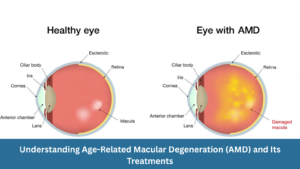
Understanding Age-Related Macular Degeneration (AMD) and Its Treatments
Understanding Age-Related Macular Degeneration (AMD) and Its Treatments At Clarity Eye Surgeons, we bring decades of ophthalmic expertise and advanced surgical experience to help Canberra

Diabetic eye disease: How to prevent vision loss?
Diabetic eye disease: How to prevent vision loss? What is diabetic eye disease? Diabetic eye disease refers to a group of eye conditions that can

Common vision problems in children and how to spot them early
Common vision problems in children and how to spot them early At Clarity Eye Surgeons in Canberra, our team of highly experienced paediatric ophthalmologists and
Double vision in children: What parents should know
Double vision in children: What parents should know Double vision, medically called diplopia, occurs when a child sees two images of a single object instead
Glaucoma: What it is, Symptoms, Causes, Types & Treatment
Glaucoma: What it is, Symptoms, Causes, Types & Treatment Glaucoma is often called the “silent thief of sight” because it can damage your vision gradually,
Living with wet macular degeneration: Treatment options and lifestyle tips
Living with wet macular degeneration: Treatment options and lifestyle tips Wet macular degeneration, also known as neovascular age-related macular degeneration (AMD), is a chronic eye
Retinal detachment: Early signs you should never ignore
Retinal detachment: Early signs you should never ignore Your eyes are extraordinary organs that allow you to experience the world in vivid colour, detail, and
Vitrectomy: What you need to know
Vitrectomy: What you need to know Vitrectomy is a specialised eye surgery performed to treat a range of disorders affecting the retina and vitreous —
Diabetes and your eyes: What you need to know
Diabetes and your eyes: What you need to know Diabetes is a chronic condition that affects how your body regulates blood sugar (glucose). While most
Nystagmus: Symptoms, Causes, and Treatments
Nystagmus: Symptoms, Causes, and Treatments Nystagmus is a condition in which the eyes make uncontrolled, repetitive movements. These movements can be slow or fast, side-to-side

What to know about blurry vision and diabetes?
What to know about blurry vision and diabetes? Blurry vision is a common and often early symptom of diabetes. If you or someone you know
Chalazion surgery: When is it necessary and What to expect
Chalazion surgery: When is it necessary and What to expect A chalazion is a common eyelid condition that can lead to discomfort, swelling, and cosmetic

Are prescription glasses effective for treating lazy eye?
Are prescription glasses effective for treating lazy eye? Lazy eye, also known as amblyopia, is a common vision problem in children, affecting a small percentage
Dry Eye Syndrome: Symptoms, Causes & Treatment
Dry Eye Syndrome: Symptoms, Causes & Treatment Do your eyes often feel dry, irritated, or fatigued? You might be experiencing Dry Eye Syndrome (DES)—a common
The Relationship Between Allergies and Eye Health in Children
The Relationship Between Allergies and Eye Health in Children Allergies are a prevalent concern among children and can significantly impact their quality of life. While
Understanding Astigmatism: Symptoms, Causes, Diagnosis, Treatment Options & Prevention
Understanding Astigmatism: Symptoms, Causes, Diagnosis, Treatment Options & Prevention What is Astigmatism? Astigmatism is a common eye condition that affects how your eye focuses light.
Understanding Retinal Detachment: Causes, Symptoms, Diagnosis and Treatment
Understanding Retinal Detachment: Causes, Symptoms, Diagnosis and Treatment As the principal ophthalmologist at Clarity Eye Surgeons, Dr Parth Shah is passionate about educating our patients