The Visual Symptoms of Cataracts
Cataracts develop when the natural crystalline lens inside the eye becomes cloudy. Because light must pass through this lens to reach the retina, any opacification — regardless of where it forms within the lens — degrades the quality of the image reaching the back of the eye. Patients commonly describe the following:
Blurred or foggy vision
The most universal symptom. Unlike blur caused by a refractive error such as short-sightedness, cataract blur does not fully correct with glasses. Patients often report that even with their best prescription, things look “smeared” or as if a fine mist has settled over their vision. Reading, recognising faces, and watching television all become progressively more effortful.
Glare and halos around lights
The cloudy lens scatters light entering the eye, creating a starburst or halo effect around point light sources. Driving at night becomes increasingly difficult as oncoming headlights and streetlights cause dazzling glare that makes it harder to see clearly in the surrounding area. This symptom is particularly prominent with posterior subcapsular cataracts.
Colours appear faded or yellowed
The ageing, clouding lens becomes progressively more yellow-brown in colour, filtering blue wavelengths of light. The visual world takes on a warm, sepia tone. Whites appear cream, and blues look greyer. Many patients only notice how dramatically their colour perception had shifted after cataract surgery restores a clear, blue-toned view.
Frequent prescription changes
As a nuclear cataract develops, the increasing density of the lens can cause a myopic shift — meaning patients who previously needed reading glasses may temporarily find they can read without them, a phenomenon called “second sight.”This apparent improvement is short-lived, and vision eventually deteriorates as the cataract progresses. Patients who notice their glasses prescription changing frequently — needing updates every few months — should have a cataract assessment.
Double vision in one eye (monocular diplopia)
Some cataracts create multiple refractive zones within the lens, causing a “ghost image” or faint second image that persists even when the other eye is closed. This is distinct from double vision caused by eye muscle problems, which requires both eyes to be open.
50%+
of Australians over 65 have some degree of cataract
3 Types
of cataract, each affecting vision differently
>95%
of patients achieve improved vision after surgery
Three Types of Cataracts — and How Each Affects Vision
Not all cataracts are the same. The three main types differ in where they form within the lens, who they affect, and how they distort vision.
1. Nuclear Cataract
The most common type, forming in the central nucleus of the lens. Nuclear cataracts are the classic age-related cataract, typically affecting people over 60. The lens gradually hardens and yellows, causing progressive blur and colour shift. The early myopic shift (“second sight”) is characteristic of nuclear cataracts. Progression is usually slow — over years.
2. Cortical Cataract
Forms in the peripheral cortex of the lens as spoke-like, wedge-shaped opacities that radiate inward toward the centre. As the spokes extend, they begin to interfere with the light path entering the pupil. Cortical cataracts are particularly associated with glare and difficulty in bright conditions. They are more common in people with diabetes and with prolonged UV light exposure.
3. Posterior Subcapsular Cataract (PSC)
Forms at the back surface of the lens, directly in the path of light approaching the retina. PSC cataracts cause disproportionately severe glare and are notorious for making near vision (reading) worse than distance vision. They progress faster than nuclear cataracts and are strongly associated with long-term steroid use, diabetes, and high myopia. PSC is discussed in detail in a separate article.
How Cataract Vision Differs from Other Eye Conditions
Several other eye conditions can cause blurring and visual change, and it is important to distinguish them from cataracts — as treatment differs significantly.
Age-Related Macular Degeneration (AMD)
AMD affects the macula — the central part of the retina responsible for fine detail. Vision loss is central: patients notice distortion or a blank patch in the centre of their vision, while peripheral vision remains intact. Straight lines may appear wavy. AMD does not cause glare or halos. Both AMD and cataracts can coexist in older patients, which complicates the assessment.
Glaucoma
Glaucoma damages the optic nerve, causing peripheral visual field loss that gradually encroaches on central vision in advanced disease. Unlike cataracts, early glaucoma is typically asymptomatic — patients do not notice the peripheral loss until it is substantial. Central visual acuity is preserved until very late stages. Glaucoma does not cause the foggy, glare-affected quality of cataract vision.
Refractive Error
Blur caused by short-sightedness, long-sightedness, or astigmatism corrects fully with the right glasses prescription. Cataract blur does not. If a patient finds their vision is blurry despite a recently updated glasses prescription, cataract should be suspected.
When to see your ophthalmologist
When Is Cataract Surgery Needed?
There is no single visual acuity threshold that triggers surgery. The decision is based on how much the cataract affects your daily life — driving, reading, watching television, recognising faces, or participating in hobbies. Surgery is appropriate when the cataract is causing meaningful functional impairment, regardless of the exact acuity measurement on the chart.
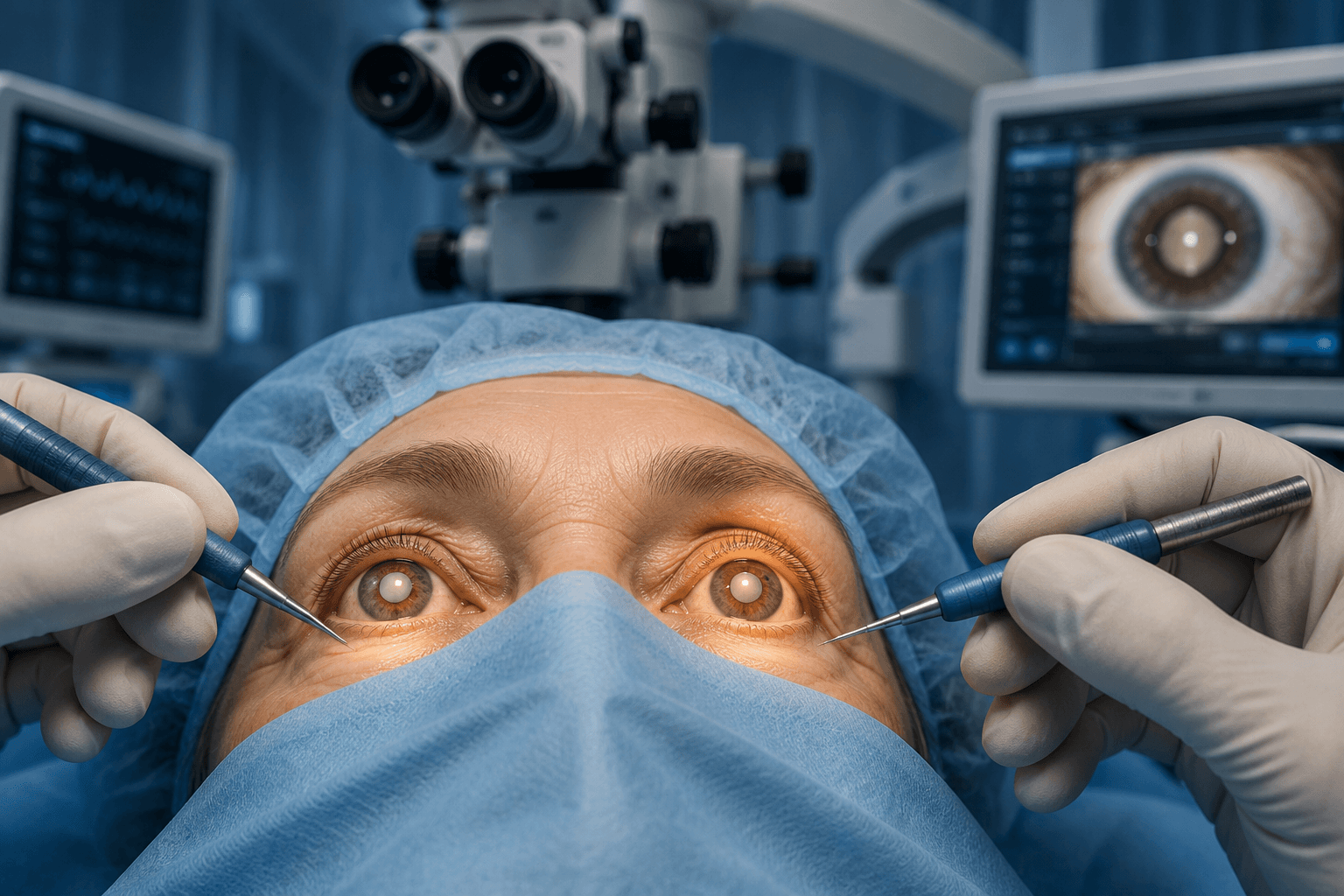
Cataract surgery is one of the most successful procedures in medicine, with more than 95% of patients achieving significant visual improvement. The procedure is done under local anaesthetic, takes approximately 15 minutes per eye, and requires no hospital stay.
Frequently Asked Questions
A very advanced, dense cataract can reduce vision to light perception only in the affected eye. However, cataracts are one of the leading causes of treatable blindness — meaning surgery can restore vision even in very advanced cases, as long as the retina and optic nerve are healthy. In Australia, most cataracts are detected and treated well before this stage.

Written by
Dr Parth ShahDr Parth Shah is a subspecialty-trained Canberra ophthalmologist with expertise in cataract surgery, paediatric eye care and strabismus surgery.
Medical disclaimer: This article is for educational purposes only and does not constitute medical advice, diagnosis, or treatment. Always consult a qualified ophthalmologist or healthcare professional regarding any eye condition or before making any healthcare decisions. Read our full disclaimer.
Concerned about your vision?
A comprehensive eye examination can determine whether cataracts are affecting your vision and when surgery may be appropriate.