
Eye Injections in Canberra
Targeted treatment for uveitis and inflammatory eye disease, from experienced ophthalmologists in Braddon, Canberra.
Medically Reviewed

Last medically reviewed on 29 June 2026. This page is educational and is not a substitute for personalised medical advice.
Treating retinal disease with eye injections
Eye injections are a vital treatment for retinal diseases that threaten vision by causing fluid leakage, abnormal blood vessel growth, or severe inflammation in the back of the eye. They are the gold standard of care for conditions like Wet Age-Related Macular Degeneration (Wet AMD), where fragile blood vessels leak fluid into the macula, as well as Diabetic Retinopathy and Diabetic Macular Oedema (DMO), which stem from blood vessel damage caused by high blood sugar.
Eye injections are also frequently used to treat chronic inflammatory eye diseases such as uveitis. By delivering specialised medications directly into the affected area of the eye, these injections can dry up abnormal fluid, reduce swelling, and work to prevent permanent vision loss.
How eye injections help
Intravitreal corticosteroids help settle inflammation rapidly and are effective for treating retinal swelling (macular oedema), vasculitis and chronic uveitis. Periocular steroid injections, administered around the eye, can also help manage broader inflammation, while immunomodulatory injections (biologics) are used for autoimmune-driven disease.
Types of Eye Injections
Intravitreal Injections
Medication is placed directly into the vitreous cavity at the centre of the eye — the preferred approach when the retina or macula is involved.
Sub-Tenon & Periocular Injections
Medication is administered around the eye rather than inside it, often used for more generalised inflammation.
Long-Acting Steroid Implants
A sustained-release option that can continue working for months to years, reducing how often injections are needed.
What happens during treatment?
Local Anaesthetic
Numbing drops or a local anaesthetic are used so the eye is comfortable throughout.
Cleaning
The surface of the eye is thoroughly cleaned to minimise the risk of infection.
The Injection
Medication is delivered through a tiny opening — the process typically takes less than a minute.
Brief Monitoring
A short check before you head home the same day — most patients describe a sensation of pressure rather than pain.
Most patients describe the sensation as pressure rather than pain, and the injection itself takes less than a minute.
Recovery Timeline
Day 1
Mild scratchiness or grittiness is common and usually settles quickly.
Within Days
Inflammation begins to settle and vision starts to improve.
1–2 Weeks
Clearer vision and reduced symptoms — most patients resume daily activities quickly.
Injection frequency varies depending on the severity of your condition and how well you respond to treatment — some patients need injections every few weeks, others only occasionally.
Benefits of Eye Injections
Fast inflammation reduction
Improved clarity and comfort
Reduced macular swelling
Better flare-up control
Lower systemic steroid dependence
Risks & Side Effects
Eye injections are generally very safe, but as with any medical procedure, some risks exist.
Temporary floaters
Small specks or shapes drifting across your vision in the days after injection, usually settling on their own.
Mild redness or irritation
Common in the first day or two as the eye recovers from the injection.
Slight pressure elevation
Eye pressure can rise temporarily — your ophthalmologist will monitor this at follow-up.
Infection (very rare)
Endophthalmitis is a rare but serious risk with any intraocular injection, requiring urgent treatment if it occurs.

Why choose Clarity Eye Surgeons
Named-Surgeon Continuity
You're cared for by the same ophthalmologist for every injection and review, rather than rotating providers.
Precise, Targeted Treatment
Medication delivered directly to the affected area, for faster relief and less reliance on systemic steroids.
Local Braddon Clinic
A purpose-built clinic in Braddon, Canberra, with both private and public treatment options close to home.
Patient-First Communication
Clear explanations of your treatment plan and what to expect at every visit.
Eye injections FAQs
A local anaesthetic numbs the eye beforehand, so most patients describe a sensation of pressure rather than pain. The injection itself typically takes less than a minute.
From the Blog

Eye Injections for Uveitis & Inflammatory Eye Disease: What to Know
Uveitis can threaten your sight if left untreated. Here's how targeted eye injections control inflammation, what to expect, and the risks involved.

How Long Is Vision Blurry After an Eye Injection?
Blurry vision after an eye injection is normal — but how long should it last? Here's the realistic recovery timeline and when to be concerned.
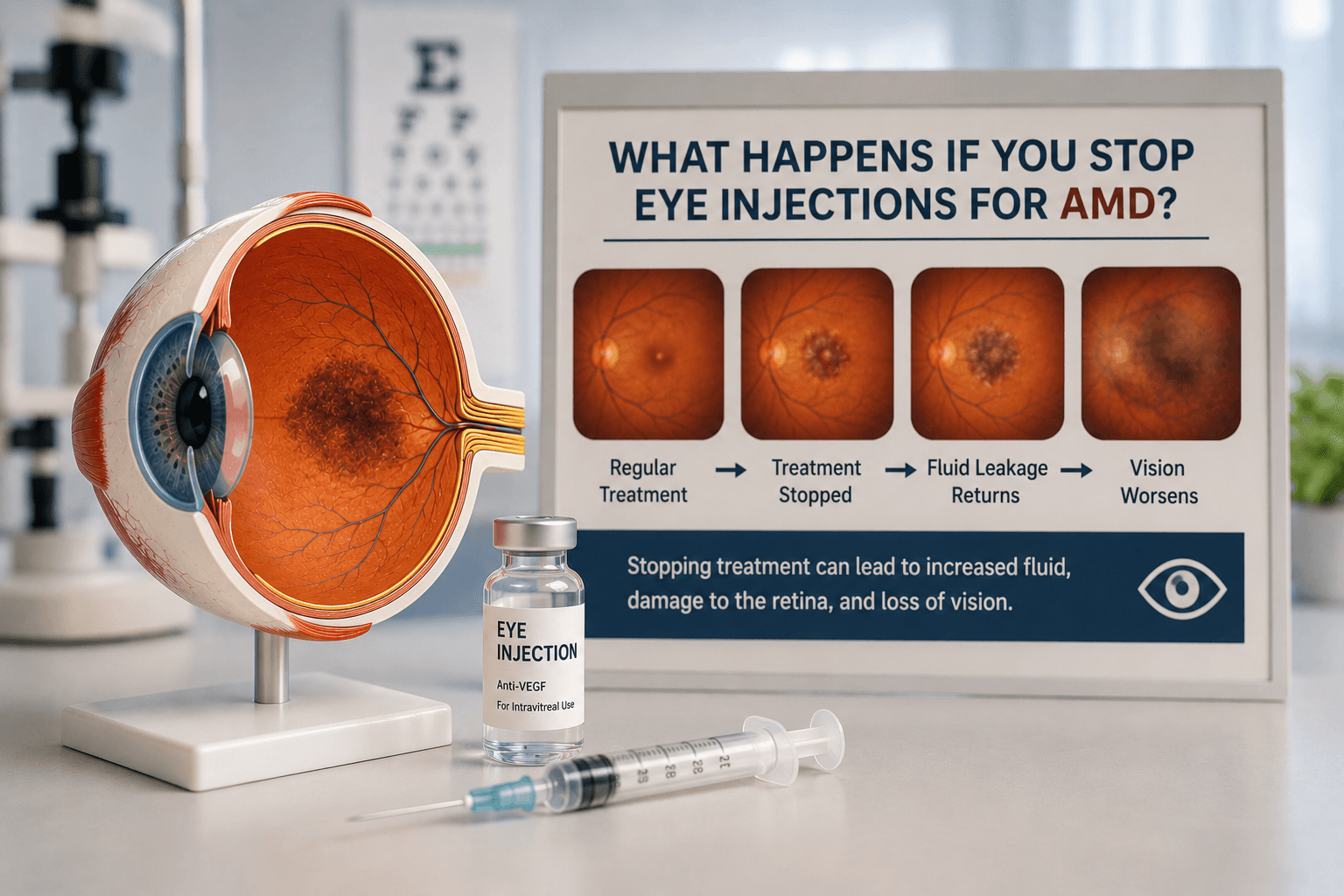
What Happens If You Stop Eye Injections for Macular Degeneration?
Skipping or stopping anti-VEGF injections for wet AMD can allow vision loss to return quickly. Here's why ongoing treatment matters.