What Is Astigmatism, and Why Does It Matter After Cataract Surgery?
Astigmatism happens when the cornea — the clear front surface of the eye — isn't perfectly round. Instead of focusing light to a single sharp point on the retina, an astigmatic cornea focuses light unevenly, causing blurred or distorted vision at every distance, not just up close or far away.
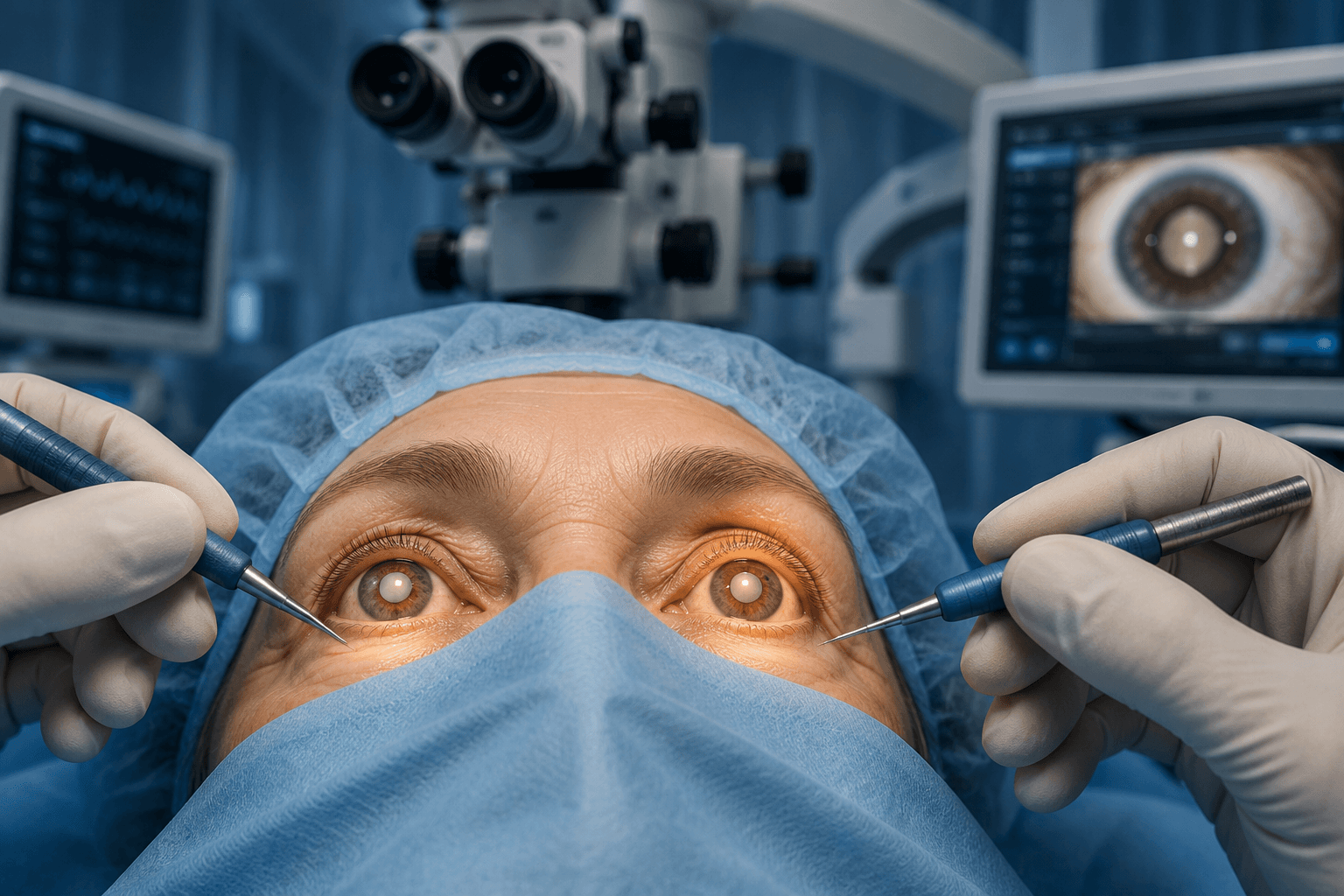
Cataract surgery replaces the eye's cloudy natural lens, but it doesn't change the shape of the cornea. That means if you have pre-existing astigmatism and receive a standard lens, the cornea's irregular shape — and the blurred vision it causes — can still affect you after surgery, even with a perfectly clear new lens in place.
What Are Toric IOLs?
Toric intraocular lenses (IOLs) are specialised implants designed to correct both the cataract and any pre-existing corneal astigmatism in a single procedure. Unlike a standard monofocal lens, which has the same focusing power all the way around, a toric IOL has different powers in different meridians — effectively built to counteract the cornea's irregular curvature.
Built-In
Astigmatism correction, inside the lens itself
Single Surgery
Cataract and astigmatism corrected together
Days–Weeks
Typical visual adjustment period
Toric IOLs vs Other Ways to Manage Astigmatism
Before toric IOLs became widely available, astigmatism during cataract surgery was often managed with limbal relaxing incisions (LRIs) — small, partial-thickness cuts made at the edge of the cornea to reshape it slightly. Here's how the main options compare:
| Toric IOL | Limbal Relaxing Incisions | Standard Lens (No Correction) | |
|---|---|---|---|
| How astigmatism is corrected | Built into the lens itself, placed inside the eye | Small incisions made in the cornea during surgery | Not corrected — astigmatism remains after surgery |
| Predictability | High — considered the most precise current option | Lower — effect can vary between patients | N/A |
| Typical glasses need (distance) | Often reduced or eliminated | Partially reduced | Usually still required |
| Additional cost | Yes — a premium lens upgrade | Sometimes included | No extra cost |
Toric IOLs are now considered the most precise and predictable way to correct astigmatism at the time of cataract surgery.
Wondering which lens is right for your eyes?
Lens choice is a personal decision based on your astigmatism, lifestyle and goals. Our ophthalmologists can talk you through your options.
Are You a Good Candidate for a Toric IOL?
Likely a Good Fit
- You have regular (symmetrical) corneal astigmatism
- You'd like to reduce glasses dependence for distance vision
- You're already planning cataract surgery
- Your eyes are otherwise healthy, with no conditions limiting visual potential
May Not Be Ideal
- You have irregular astigmatism (e.g. from corneal scarring or keratoconus)
- You have other eye conditions that limit how much vision can improve
- You're not concerned about reducing glasses use for distance
Limitations & Realistic Expectations
Toric IOLs are highly effective, but they're not magic. A few realistic points worth knowing before you decide:
- • Precise surgical alignment is critical — the lens needs to sit at exactly the right angle to work as intended.
- • They're a premium lens option, which typically comes with an additional out-of-pocket cost.
- • Outcomes still depend on your individual eye health and healing.
- • Small shifts in astigmatism can occur over time, even after a successful result.
Ask your surgeon how they verify lens position
Conclusion
Toric IOLs are the most precise way to correct astigmatism during cataract surgery, and most patients who choose them are far less dependent on glasses for distance vision afterwards. They're not a guarantee of total glasses independence, and they come at a premium cost — but for the right candidate, they offer a meaningfully clearer result than a standard lens alone. Lens selection is a highly personal decision, so talk it through with your ophthalmologist in the context of your own eyes, lifestyle and expectations.
Frequently Asked Questions
Through a comprehensive pre-operative eye exam that includes detailed corneal measurements (corneal topography), which map the exact shape and degree of astigmatism so the right lens power can be calculated.

Written by
Dr Parth ShahDr Parth Shah is a Canberra-based ophthalmologist specialising in cataract surgery, combining technical precision with clear, patient-first explanations of lens options.
Medical disclaimer: This article is for educational purposes only and does not constitute medical advice, diagnosis, or treatment. Always consult a qualified ophthalmologist or healthcare professional regarding any eye condition or before making any healthcare decisions. Read our full disclaimer.
Ready to discuss your lens options?
Book a consultation with our ophthalmologists to find out if a toric IOL is right for your eyes.