What Is an Intraocular Lens?
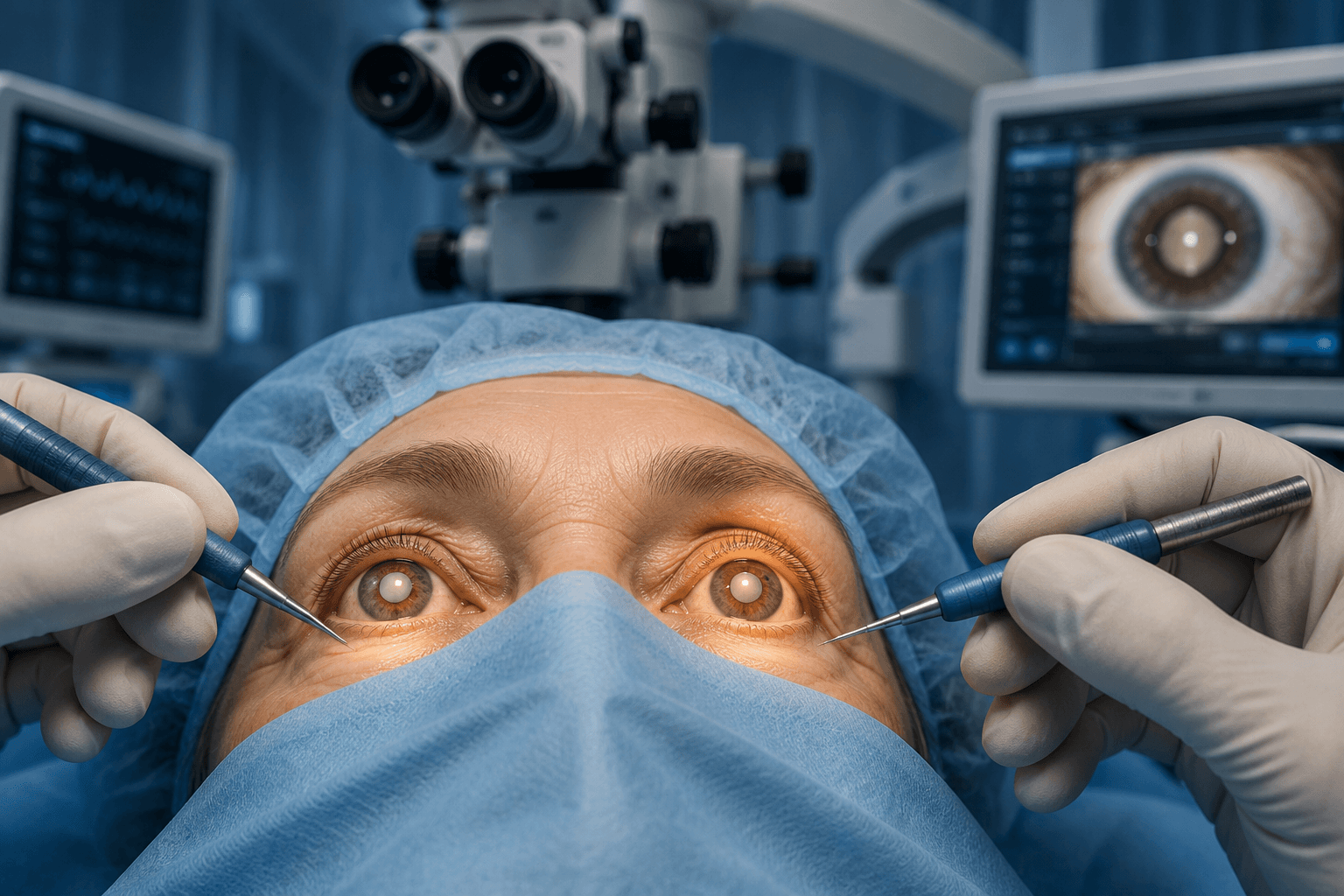
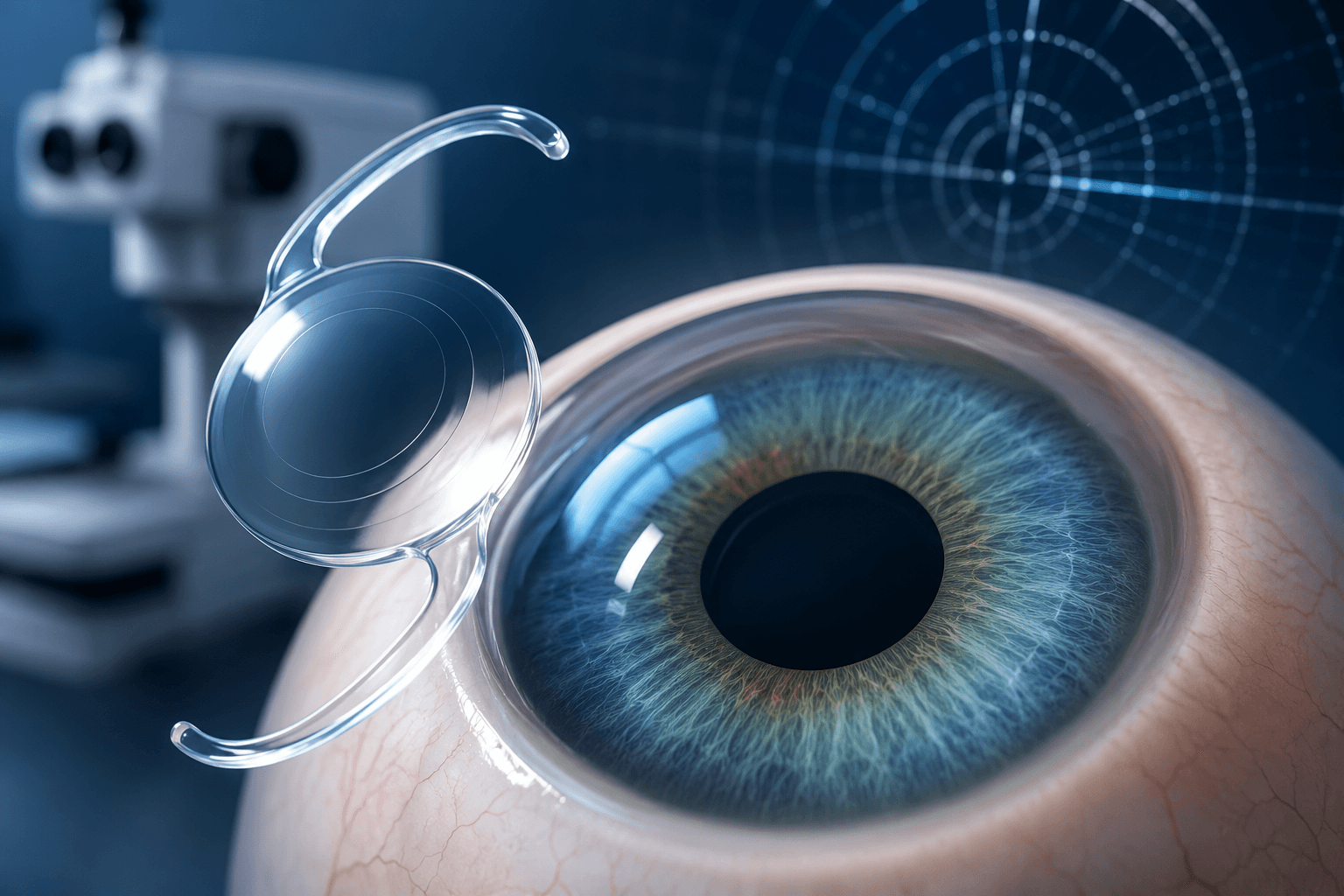
During cataract surgery, the clouded natural lens is removed by phacoemulsification. A clear, artificial intraocular lens (IOL) is then implanted in its place, folded and inserted through the same small incision, where it unfolds inside the lens capsule bag.
Modern IOLs are made from flexible, biocompatible acrylic material. They are designed to last a lifetime. Unlike your natural lens, an IOL does not change shape to focus at different distances (a process called accommodation), which is why most patients over 45 will still need reading glasses after cataract surgery with a standard monofocal lens — the same reason most people over 45 need reading glasses even without cataracts (presbyopia).
The power of the IOL is calculated precisely using pre-operative biometry measurements, targeting a specific refractive outcome. This calculation is one of the most important parts of the surgical planning process.
Permanent
IOLs are designed to last a lifetime — no replacement needed
~2.5 mm
Incision size needed to insert a folded modern IOL
4 Types
Main IOL categories: monofocal, toric, multifocal, EDOF
Monofocal IOLs: The Standard Choice
Monofocal lenses have a single focal point. The vast majority are set for clear distance vision, meaning patients will need reading glasses for close tasks. They can also be set for near vision (“monovision”) if both eyes are being operated on, allowing one eye to focus at distance and the other at near.
Monofocal IOLs are the only lens type covered by Medicare in the public hospital system. They offer excellent contrast sensitivity, minimal risk of halos or glare, and highly predictable outcomes. For many patients — particularly those comfortable wearing glasses for reading — they are the right choice.
Toric IOLs: Correcting Astigmatism
Astigmatism is caused by the cornea being more curved in one meridian than another, like a rugby ball rather than a soccer ball. Standard IOLs do not correct corneal astigmatism, so patients with significant astigmatism who receive a standard monofocal IOL will still need glasses to correct the residual astigmatism after surgery.
Toric IOLs are specially designed with two different powers in perpendicular axes, allowing them to correct the cornea’s astigmatism when aligned precisely during implantation. For patients with moderate-to-significant astigmatism (>1.0–1.5 dioptres), a toric IOL can meaningfully reduce distance glasses dependence.
Toric IOLs carry an out-of-pocket cost supplement but offer excellent value for astigmatic patients who want to minimise glasses for distance activities. They are available in both monofocal and premium (multifocal, EDOF) platforms.
Multifocal IOLs: Aiming for Spectacle Independence
Multifocal IOLs use concentric diffractive or refractive zones to create multiple focal points within a single lens — typically one for distance and one for near. The aim is to reduce or eliminate the need for glasses at all distances.
For the right patient, multifocal IOLs can deliver genuine spectacle independence: reading a menu, driving, and using a computer all without glasses. This can be a transformative outcome.
The trade-offs are real and should be discussed honestly:
- • Halos and glare: The multiple zones within the lens can cause haloes and glare around lights at night. These are most noticeable in the early months after surgery and improve for most patients as the brain adapts (neuroadaptation). A minority of patients find them persistently bothersome.
- • Reduced contrast sensitivity: Some patients notice slightly less contrast clarity in dim lighting compared to monofocal IOLs.
- • Not suitable for all eyes: Patients with significant macular degeneration, corneal disease (such as irregular astigmatism), glaucoma, or previous LASIK surgery may not achieve the expected outcome with multifocal IOLs.
- • Out-of-pocket cost: Premium IOLs have a significant additional cost not covered by Medicare or most insurers.
Extended Depth of Focus (EDOF) IOLs: A Middle Ground
EDOF IOLs use a different optical design to extend the range of clear vision continuously from distance through to intermediate, rather than creating distinct near and distance focal points like multifocal IOLs. This provides a more natural, seamless visual experience across a range of activities.
EDOF lenses typically offer:
- • Good distance and intermediate vision (computer work, driving)
- • Better contrast sensitivity and fewer halos than multifocal IOLs
- • Reading glasses may still be needed for very fine print
- • A significant reduction in spectacle dependence for many daily tasks
EDOF IOLs represent an increasingly popular option for patients who want more than a standard monofocal but are concerned about the halo risk of multifocal lenses, or who have a lifestyle that prioritises good distance and intermediate vision (such as computer workers and outdoor enthusiasts).
IOL Types Compared
| Monofocal | Toric | Multifocal | EDOF | |
|---|---|---|---|---|
| Focal points | One (usually distance) | One + astigmatism correction | Two (distance + near) | Extended range (distance + intermediate) |
| Glasses needed? | Reading glasses for near | Reading glasses (or less if astigmatism corrected) | Aim for spectacle independence | Reading glasses for fine print; less for other tasks |
| Night vision halos | Minimal | Minimal | More likely — halos and glare | Less than multifocal; some glare possible |
| Best suited for | Most patients; reliable, predictable outcome | Patients with significant astigmatism | Patients wanting glasses independence; good visual health | Patients wanting reduced glasses use with lower halo risk |
| Cost | Covered by Medicare (public system) | Out-of-pocket supplement | Significant out-of-pocket cost | Significant out-of-pocket cost |
Unsure which lens is right for you?
IOL selection is one of the most important decisions in cataract surgery. Dr Parth Shah will guide you through the options based on your eyes and lifestyle.
How to Choose the Right IOL for You
IOL selection is not one-size-fits-all. Your surgeon will consider a combination of clinical factors and personal preferences to recommend the most appropriate lens.
Clinical factors your surgeon considers:
- • Degree of corneal astigmatism — significant astigmatism favours a toric IOL
- • Corneal health — irregular corneas or prior refractive surgery limit premium IOL performance
- • Retinal health — macular disease limits the benefit of premium lenses
- • Pupil size and behaviour — relevant to multifocal performance
- • Ocular surface health — significant dry eye affects visual outcomes with premium lenses
Questions to ask yourself:
- • How important is glasses independence to me?
- • Am I comfortable with a small risk of halos in exchange for less spectacle dependence?
- • Do I drive frequently at night? (halos may be more noticeable)
- • What activities dominate my daily life — reading, computers, outdoor sport?
- • Am I willing to invest in a premium lens, or does a monofocal with reading glasses suit me better?
There is no wrong choice
Frequently Asked Questions
IOL exchange (removing and replacing the implanted lens) is technically possible but is a more complex procedure than the original surgery. It is generally considered only when there is a clear clinical reason — such as a significantly incorrect lens power causing major refractive error, or a lens that has shifted or caused complications. It is not routinely done simply because a patient is unhappy with the lens choice. Choosing carefully the first time is important.

Written by
Dr Parth ShahDr Parth Shah is a subspecialty-trained Canberra ophthalmologist with expertise in cataract surgery, paediatric eye care and strabismus surgery.
Medical disclaimer: This article is for educational purposes only and does not constitute medical advice, diagnosis, or treatment. Always consult a qualified ophthalmologist or healthcare professional regarding any eye condition or before making any healthcare decisions. Read our full disclaimer.
Start your IOL conversation
Book a cataract assessment at Clarity Eye Surgeons to discuss which intraocular lens is best suited to your eyes and lifestyle.