What Is a Cataract?
Inside every eye sits a crystalline lens — a transparent, flexible structure that focuses light onto the retina. A cataract occurs when the proteins within this lens clump together and cause the lens to become cloudy, gradually degrading the quality of vision.
The most common cause is simply ageing: almost everyone who lives long enough will develop some degree of cataract. Other causes include diabetes, prolonged corticosteroid use, eye trauma, UV radiation exposure, and certain genetic or metabolic conditions. Cataracts are the leading cause of correctable blindness worldwide — including in Australia, where they affect approximately half of all people over 65.
There are three main types: nuclear cataracts (the most common, affecting the centre of the lens), cortical cataracts (spoke-like opacities in the periphery of the lens), and posterior subcapsular cataracts (PSC) (at the back of the lens, causing disproportionate reading difficulty and glare). Many patients have a combination of types.
Who Needs Surgery?
Surgery is indicated when a cataract causes meaningful impairment to daily life. There is no single visual acuity threshold that automatically triggers the decision — instead, your surgeon considers the functional impact on your specific activities and lifestyle. Commonly cited indications include:
- • Difficulty driving, particularly at night due to glare and halos
- • Inability to read comfortably despite an up-to-date glasses prescription
- • Problems with work, computer use, or leisure activities
- • Colour perception changes affecting quality of life or occupation
- • Frequent prescription changes that no longer adequately correct vision
- • The cataract is causing other eye problems, such as elevated intraocular pressure (phacolytic or phacomorphic glaucoma)
Surgery is elective — but timing matters
Pre-Operative Assessment
Before surgery, a comprehensive pre-operative assessment is performed. This typically involves:
- Biometry: Highly accurate measurements of the eye’s length, corneal curvature, and anterior chamber depth are taken using optical biometry devices (such as the IOLMaster or Lenstar). These measurements determine the correct power of the intraocular lens (IOL) needed to achieve the desired refractive outcome after surgery.
- Slit-lamp examination: Detailed examination of the cataract and surrounding eye structures, including the cornea, iris, and lens capsule.
- Retinal assessment: Dilation of the pupil to examine the macula and optic nerve, ensuring there is no additional pathology that might limit the visual outcome.
- Medical review: A letter to your GP may be required if you take medications that affect surgery (particularly alpha-blockers such as tamsulosin, which can cause intraoperative floppy iris syndrome, or anticoagulants).
- Lens selection: Discussion of IOL options, targets, and any premium lens choices.
The Procedure: Step by Step
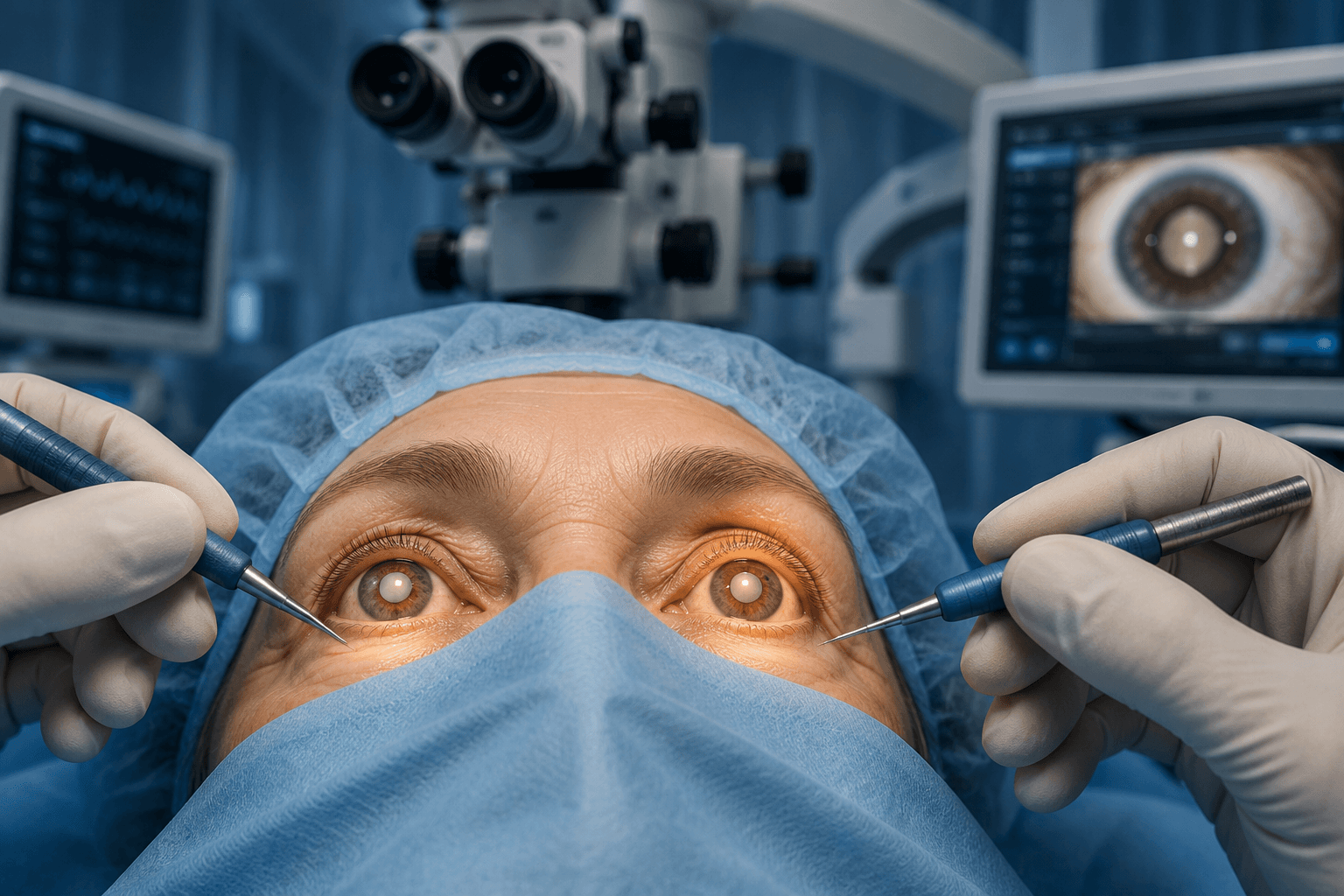
Modern cataract surgery uses a technique called phacoemulsification, which has been refined over decades and is now extraordinarily safe and precise. Here is what happens:
- 1. Anaesthetic: Anaesthetic eye drops are instilled to numb the eye. Light sedation is available for anxious patients. Most patients are awake but comfortable throughout.
- 2. Incision: A very small incision (approximately 2.2–2.5 mm) is made at the edge of the cornea. This incision is self-sealing and typically requires no sutures.
- 3. Capsulorrhexis: A circular opening is carefully created in the front surface of the lens capsule (the anterior capsule) to access the cataract inside.
- 4. Phacoemulsification: A tiny ultrasound probe is inserted into the eye. It emits ultrasound energy that breaks the cataract into small fragments, which are then aspirated (vacuumed) out of the eye. This is the main operative step and takes only a few minutes.
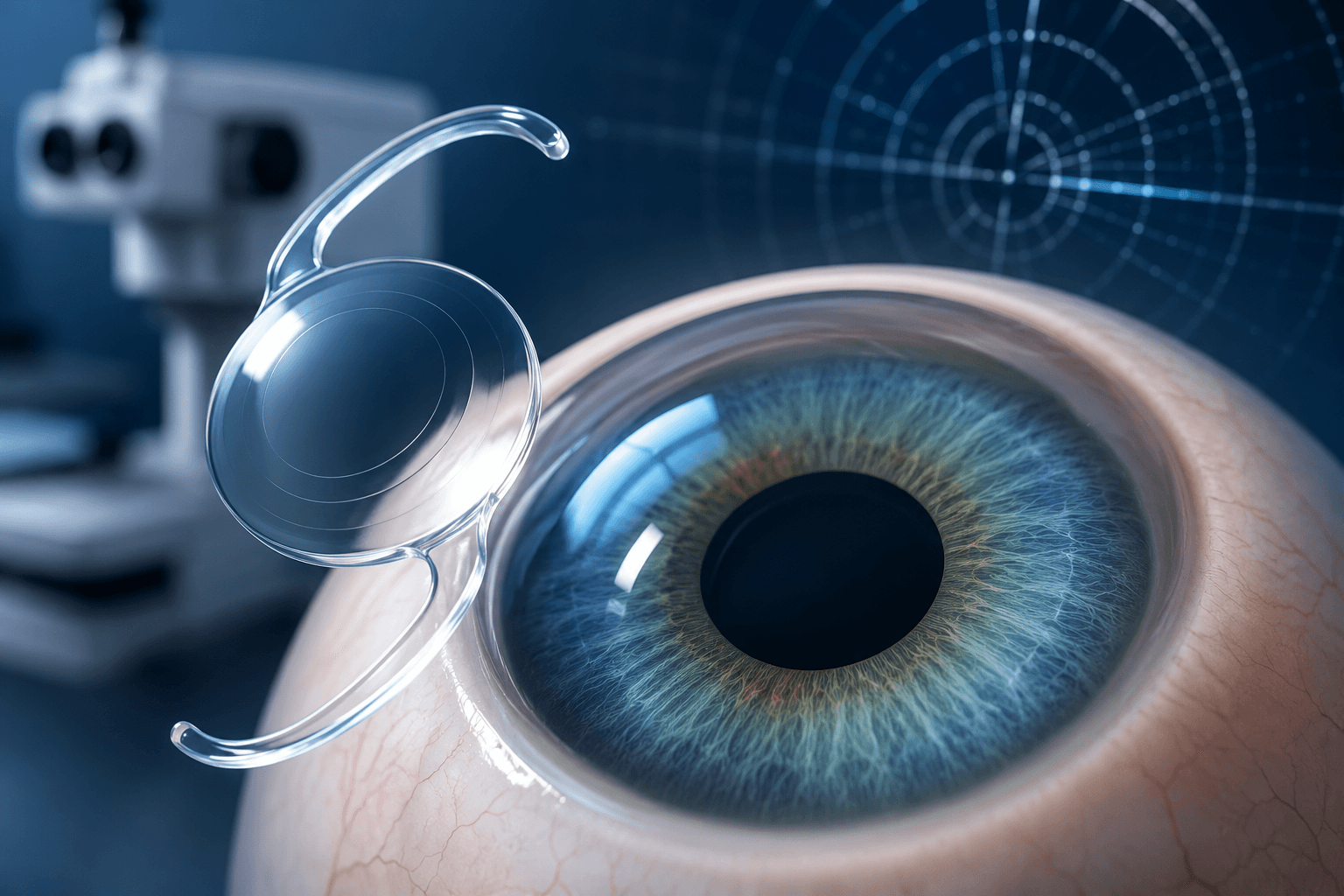
- 5. IOL Implantation: With the cataract removed and the posterior lens capsule intact, the surgeon inserts a folded intraocular lens through the same small incision. The IOL unfolds within the lens capsule bag and settles into position.
- 6. Wound check: The surgeon confirms the incision is self-sealed and the eye pressure is appropriate. Antibiotic drops are instilled, and a protective shield is placed over the eye.
The entire procedure takes approximately 15 minutes. Patients go home the same day after a brief period of observation.
>95%
of patients achieve significant visual improvement after surgery
15 min
Approximate duration of each eye’s procedure
3 Months
Time to complete healing and stable vision
Intraocular Lens Options
The choice of IOL is one of the most important decisions in cataract surgery, as it determines your vision for the rest of your life.
Monofocal Lenses (Standard)
These lenses have a single focal point — typically set for clear distance vision. They are fully covered by Medicare in the public system and are the most widely implanted IOL type in Australia. Reading glasses are needed for near tasks. They offer excellent distance vision and reliable outcomes, with minimal risk of halos or glare.
Toric Lenses
Toric IOLs are designed to correct astigmatism in addition to cataract removal. They must be aligned precisely with the eye’s axis of astigmatism during surgery. For patients with significant astigmatism, toric lenses can dramatically reduce distance glasses dependence and are a worthwhile investment.
Multifocal Lenses
These premium lenses have multiple concentric zones providing both distance and near focal points. They aim to reduce or eliminate the need for glasses at all distances, but can cause halos and glare around lights — particularly problematic for night driving for some patients. They require precise biometry and are not appropriate for eyes with corneal disease, macular disease, or certain other conditions.
Extended Depth of Focus (EDOF) Lenses
EDOF lenses provide a continuous elongated focal zone rather than distinct near and distance points. They offer a good intermediate and distance range with fewer halos than traditional multifocal lenses, but near vision for very fine print may still require glasses. They represent a middle ground between monofocal and multifocal IOLs.
Considering cataract surgery?
A comprehensive assessment will determine which IOL suits your eyes, lifestyle and visual goals.
Costs and Medicare in Australia
Cataract surgery costs vary depending on whether you are treated in the public or private system.
Public Hospital System
Treatment via the public system is free at the point of care, covered by Medicare and the public hospital. The trade-off is a waiting list, which can range from several months to over a year depending on your state and local hospital. You will be assigned a surgeon (no choice), and premium IOLs are not available — only standard monofocal lenses.
Private System
Private cataract surgery involves Medicare rebates for the surgical procedure, with additional costs including a surgeon gap fee, anaesthetist fee, and hospital facility fee. Private hospital cover (not extras) is required to access the hospital rebate. Out-of-pocket costs depend on your insurer and whether your surgeon offers a no-gap or known-gap arrangement.
Premium IOLs (multifocal, EDOF, toric) carry additional out-of-pocket costs as they are not covered by the Medicare rebate. These costs should be discussed transparently with your surgeon at the pre-operative assessment.
Ask about no-gap and known-gap options
Outcomes and Long-Term Considerations
Cataract surgery has one of the highest success rates of any surgical procedure in medicine. In expert hands, more than 95% of patients achieve significant visual improvement. Serious complications are rare but include:
- Posterior capsule rupture: Occurs in approximately 1–2% of cases; can be managed intraoperatively by an experienced surgeon with good outcomes.
- Endophthalmitis (infection): Affects approximately 1 in 1,000 cases; treated urgently with intravitreal antibiotics.
- Posterior capsule opacification (PCO): The most common late complication, occurring in approximately 20% of patients within 5 years. The residual posterior capsule becomes cloudy. Easily and painlessly treated with a brief YAG laser procedure in the outpatient setting.
Once implanted, an IOL is a permanent, lifelong device. The cataract cannot return. Your IOL will not need replacing. The main vision-related changes over time come from the ageing of other eye structures — the retina, optic nerve, and cornea — which are independent of the IOL.
Frequently Asked Questions
The decision is based on functional impact, not a number on a chart. If your cataract is significantly affecting your ability to drive safely, read, watch television, work, or enjoy hobbies, then surgery is appropriate. Your ophthalmologist will assess both the cataract and your vision to determine whether the benefit of surgery outweighs any risk in your individual case.

Written by
Dr Parth ShahDr Parth Shah is a subspecialty-trained Canberra ophthalmologist with expertise in cataract surgery, paediatric eye care and strabismus surgery.
Medical disclaimer: This article is for educational purposes only and does not constitute medical advice, diagnosis, or treatment. Always consult a qualified ophthalmologist or healthcare professional regarding any eye condition or before making any healthcare decisions. Read our full disclaimer.
Take the first step toward clearer vision
Book a cataract assessment with Dr Parth Shah at Clarity Eye Surgeons in Canberra to understand your options and what to expect.