Understanding Both Conditions
Cataracts and glaucoma are the two most prevalent sight-threatening conditions in Australia, and both become increasingly common from the age of 60 onwards. While they are distinct diseases affecting different parts of the eye, they frequently coexist — and managing one inevitably affects the other.
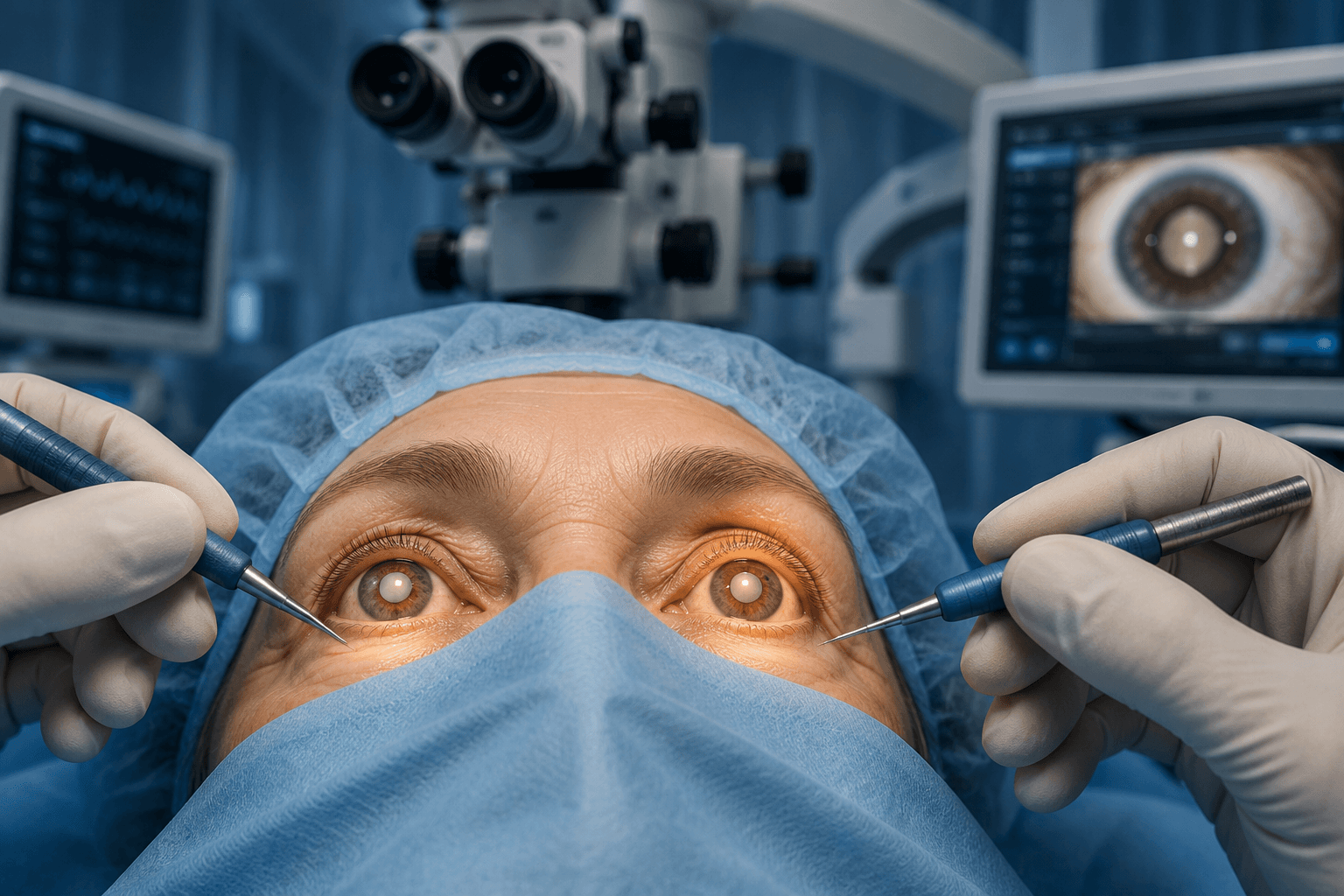
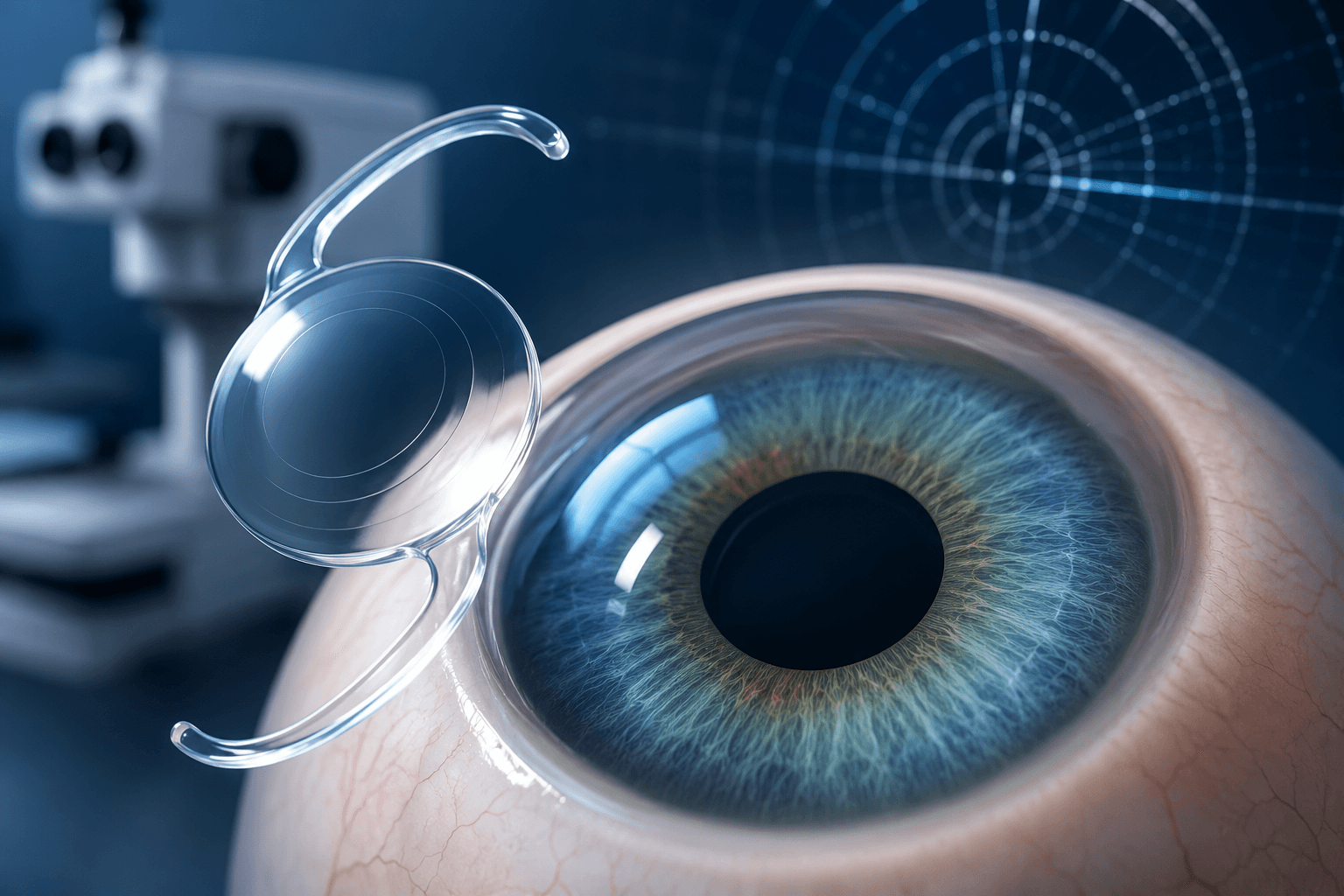
A cataractis a clouding of the eye’s natural lens, causing blurred or dim vision that worsens progressively over months to years. Treatment is surgical: the cloudy lens is removed and replaced with a clear artificial intraocular lens (IOL).
Glaucoma is a group of conditions characterised by damage to the optic nerve, most commonly from elevated intraocular pressure (IOP). It is often asymptomatic until significant vision loss has occurred, affecting peripheral vision first. Management ranges from eye drops to laser to surgery, depending on severity.
How Cataracts and Glaucoma Interact
When a patient has both conditions, surgical planning requires careful thought. Several interactions are clinically important:
- Angle-closure risk: As the crystalline lens enlarges with age, it can narrow the drainage angle of the eye. In patients with narrow-angle or angle-closure glaucoma, removing the thick cataract often dramatically opens the drainage angle, providing meaningful IOP reduction as a direct result of the cataract extraction alone.
- IOP monitoring: Patients on glaucoma drops must continue their medications around the time of cataract surgery as directed. IOP can fluctuate in the early post-operative period, and closer monitoring is warranted.
- Intraoperative floppy iris syndrome (IFIS): Certain glaucoma medications — particularly alpha-agonist drops such as brimonidine — can cause the iris to become flaccid during surgery, making the procedure more challenging. Your surgeon will ask about all eye drops in advance so appropriate steps can be taken.
- Advanced glaucoma and IOL selection: Where there is significant optic nerve damage, visual field loss may persist after cataract surgery regardless of how successful the lens exchange is. Setting realistic expectations is an important part of the pre-operative discussion.
2–4 mmHg
Typical IOP reduction from cataract removal alone
1 in 10
Australians over 80 have glaucoma
MIGS
Can be added to cataract surgery in a single visit
Combined Cataract Surgery and MIGS
For patients with mild-to-moderate open-angle glaucoma requiring better IOP control, combining phacoemulsification with a MIGS procedure is an efficient and effective approach. The most commonly used MIGS devices in Australia include:
- iStent inject W— two tiny titanium stents placed in the trabecular meshwork to create a bypass for aqueous drainage.
- Hydrus microstent— a small scaffold that scaffolds Schlemm’s canal, improving aqueous outflow over a larger arc.
Both devices are implanted through the same corneal incision used for cataract surgery, adding only a few minutes to the procedure. Evidence from randomised controlled trials demonstrates that combined cataract–MIGS surgery achieves greater IOP reduction than cataract surgery alone, and significantly reduces the number of glaucoma drops patients need post-operatively.
When separation is preferred
Pre-operative assessment for combined surgery should include optical coherence tomography (OCT) of the optic nerve and retinal nerve fibre layer, as well as automated visual field testing, to establish a baseline and guide surgical planning.
Have both cataracts and glaucoma?
A comprehensive consultation can establish whether a combined procedure is the right approach for your eyes.
Cataract Alone vs Combined Cataract & MIGS
| Cataract Surgery Alone | Combined Cataract + MIGS | |
|---|---|---|
| Procedure | Phacoemulsification with intraocular lens (IOL) implant only | Phacoemulsification with IOL implant plus MIGS device (e.g. iStent or Hydrus) |
| Effect on IOP | Cataract removal alone typically lowers IOP by 2–4 mmHg | Additional IOP reduction of 3–7 mmHg from MIGS, often allowing reduction in glaucoma drops |
| Recovery | Standard cataract recovery: most patients see well within 24–48 hours | Similar recovery to cataract alone; no significant additional downtime |
| Risk profile | Very low risk in uncomplicated cases | Slightly longer procedure; MIGS adds minimal additional risk when performed by an experienced surgeon |
| Best suited for | Patients with well-controlled glaucoma not requiring IOP reduction | Patients with mild-to-moderate glaucoma requiring better IOP control or drop reduction |
Conclusion
Having both cataracts and glaucoma is common, and the coexistence of these conditions need not mean two separate surgical episodes. For many patients, combining phacoemulsification with a MIGS procedure delivers improved vision and better IOP control in a single, safe procedure. The key is thorough pre-operative assessment — including optic nerve imaging and visual field testing — to match the surgical approach to the severity of your glaucoma.
Frequently Asked Questions
Yes. Removing the natural lens reduces the eye’s internal volume, which typically lowers intraocular pressure (IOP) by around 2–4 mmHg. This effect is more pronounced in angle-closure glaucoma, where the thick cataract was physically narrowing the drainage angle. Phacoemulsification alone can be a meaningful IOP-lowering intervention in these cases.

Written by
Dr Parth ShahDr Parth Shah is a subspecialty-trained Canberra ophthalmologist with expertise in cataract surgery, paediatric eye care and strabismus surgery.
Medical disclaimer: This article is for educational purposes only and does not constitute medical advice, diagnosis, or treatment. Always consult a qualified ophthalmologist or healthcare professional regarding any eye condition or before making any healthcare decisions. Read our full disclaimer.
Ready to discuss your options?
Book a consultation with Dr Parth Shah to explore the right surgical approach for your cataracts and glaucoma.