How Cataracts Affect Driving
Driving is a visually demanding task. It requires sharp acuity to read signs, adequate contrast sensitivity to detect other road users, and the ability to recover quickly from glare. Cataracts degrade all three.
- Reduced contrast sensitivity:Even when a Snellen chart reading remains adequate, cataracts scatter light within the eye, making it harder to distinguish objects from their backgrounds — especially in poor lighting conditions.
- Glare and halos from headlights: Oncoming headlights become dazzling, with starbursts or halos that temporarily bleach vision. Night driving is typically the first area patients notice significant difficulty.
- Faded colour discrimination: Posterior subcapsular and nuclear cataracts cause a yellowing of vision. Traffic light recognition and reading coloured road signs can become unreliable.
- Reduced visual acuity in dim conditions: Cataract-related blur is most pronounced when the pupil is large and more scattered light reaches the retina — exactly the conditions encountered when driving at dusk or after dark.
Australian Visual Standards for Drivers
The Austroads Assessing Fitness to Drive guidelines set out the minimum visual requirements for private and commercial drivers in Australia. For a standard unconditional private vehicle licence, the key requirements are:
- Visual acuity: At least 6/12 in the better eye, with or without corrective lenses.
- Binocular visual field: At least 110 degrees horizontal extent, with no significant defects in the central 20 degrees.
- Monocular drivers: May still be eligible to drive under specific assessment conditions.
Commercial vehicle licence holders (heavy vehicles, buses, taxis) face a higher standard of 6/9 or better in each eye separately. Cataracts that have no appreciable effect on a formal eye test result may still impair functional driving ability — particularly through glare disability and reduced contrast sensitivity, which standard Snellen acuity testing does not fully capture.
6/12
Minimum visual acuity to hold an Australian private licence
24–72 hrs
Typical time to driving clearance after cataract surgery
110°
Minimum binocular visual field required by Austroads
Signs That Driving May No Longer Be Safe
Cataract-related driving impairment often develops gradually. The following warning signs warrant an urgent eye review:
- • Difficulty reading street signs or number plates at night
- • Being dazzled or temporarily blinded by oncoming headlights
- • Needing to drive much more slowly than the conditions warrant
- • Making more errors at intersections or when merging
- • Passengers expressing concern about your driving
- • Avoiding night driving altogether
- • Feeling anxious or exhausted after short drives
Legal obligation
Concerned about your driving vision?
A cataract assessment can clarify whether surgery would restore vision to a safe driving standard.
Driving After Cataract Surgery
Cataract surgery is one of the most effective interventions available for restoring driving vision. Multiple studies have demonstrated that driving performance — as measured by simulator performance, lane-keeping accuracy, and hazard detection — improves significantly following successful surgery.
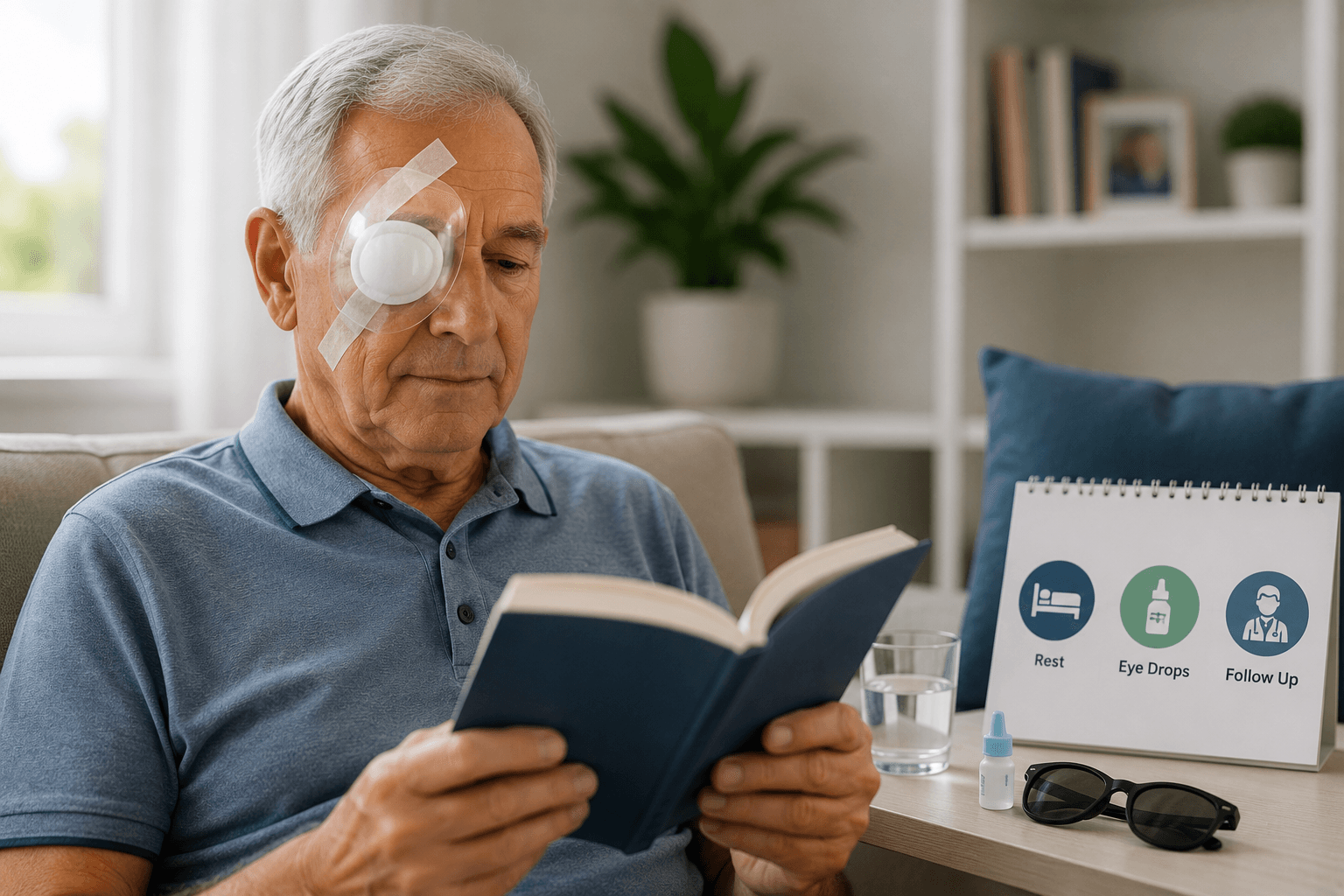
At your first post-operative review, typically the morning after surgery, your surgeon will check your vision and confirm whether you meet the standard required to drive. Most patients are cleared within 24–72 hours. You must not drive on the day of the procedure itself.
Night driving typically improves significantly once surgery is complete and the eye has had a few days to settle. Patients who previously wore glasses may find their prescription has changed considerably, and an updated glasses prescription (if required) should be obtained once both eyes have fully healed — usually after 4–6 weeks.
Conclusion
Cataracts progressively erode the visual abilities most critical for safe driving — contrast sensitivity, glare recovery, and acuity in low light. Australian law requires drivers to meet the Austroads visual standard, and there is both a legal and ethical obligation to stop driving when vision no longer meets that threshold. The reassuring news is that cataract surgery typically restores driving-quality vision within days, with most patients able to drive again at their first post-operative appointment.
Frequently Asked Questions
Australian drivers have a legal obligation to meet the Austroads visual standards. If your vision has deteriorated below the required standard and you continue to drive, you may face legal consequences in the event of an accident, including problems with insurance claims. Your GP or ophthalmologist can formally advise you if they believe your vision is no longer fit to drive.

Written by
Dr Parth ShahDr Parth Shah is a subspecialty-trained Canberra ophthalmologist with expertise in cataract surgery, paediatric eye care and strabismus surgery.
Medical disclaimer: This article is for educational purposes only and does not constitute medical advice, diagnosis, or treatment. Always consult a qualified ophthalmologist or healthcare professional regarding any eye condition or before making any healthcare decisions. Read our full disclaimer.
Ready to restore your driving vision?
Book a consultation with Dr Parth Shah to discuss cataract surgery and what to expect for your driving.