Why Diabetes Accelerates Cataract Development
The lens of the eye depends on a precisely regulated biochemical environment to remain transparent. Persistent high blood glucose disrupts this environment in two key ways.
First, excess glucose is converted to sorbitol by the enzyme aldose reductase within the lens. Sorbitol accumulates because it cannot easily cross cell membranes, drawing water into the lens fibres and causing swelling and opacification. Second, chronically elevated glucose drives oxidative stress, generating free radicals that damage lens proteins and accelerate the formation of age-related (nuclear and cortical) cataracts.
A rarer but distinctive form — the “snowflake” or metabolic cataract — can develop rapidly in young people with poorly controlled type 1 diabetes. This presents as white, subcapsular opacities resembling snowflakes, and can progress to total lens opacification over weeks. It is uncommon in modern practice due to improved diabetes management.
More commonly, people with type 2 diabetes in their 40s and 50s present with accelerated age-related cataracts — nuclear sclerosis or posterior subcapsular opacities — that would otherwise be expected a decade later in a non-diabetic individual.
Pre-operative Considerations for Diabetic Patients
Diabetic patients require a more thorough pre-operative work-up than the general cataract population. Key considerations include:
- HbA1c: Ideally below 8% (64 mmol/mol) before elective surgery. Higher levels are associated with impaired wound healing, increased infection risk, and greater post-operative inflammation. Your GP may advise optimising glycaemic control before proceeding.
- Retinal assessment:Diabetic retinopathy must be evaluated thoroughly before cataract surgery. In more advanced retinopathy, the cataract may actually be the main obstacle to laser or injection treatment of the retina — removing it improves access to the retina for treatment. Active, untreated proliferative retinopathy or significant diabetic macular oedema (DMO) should generally be addressed before or at the time of cataract surgery.
- Fasting instructions: Diabetic patients on insulin or oral hypoglycaemic agents require specific fasting guidance from their GP or endocrinologist before surgery. Blood glucose should be monitored on the day of the procedure to avoid hypoglycaemia or severe hyperglycaemia.
- Pupil dilation: Diabetic autonomic neuropathy can impair pupil dilation, potentially complicating surgical access. Your surgeon will assess pupil reactivity pre-operatively.
Treat significant retinopathy before cataract surgery
During Surgery: What’s Different for Diabetic Patients
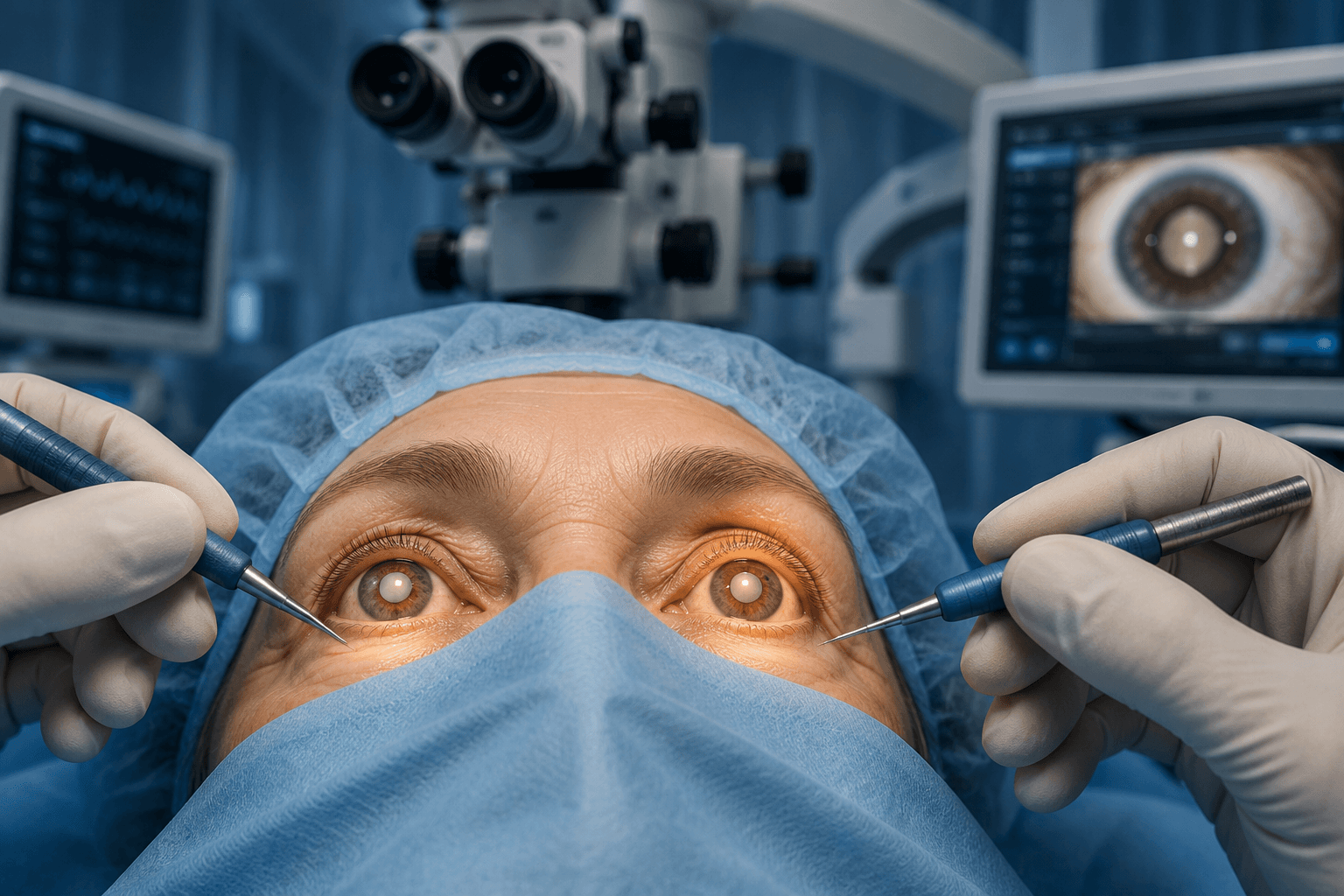
Cataract surgery in diabetic patients follows the same phacoemulsification technique as in non-diabetic patients, but several intraoperative factors may require additional attention:
- Denser cataracts: Prolonged uncontrolled hyperglycaemia can produce a denser nuclear sclerosis, requiring more ultrasound energy during phacoemulsification. This is managed through careful surgical technique.
- Poor pupil dilation: A dilator ring or iris hooks may be needed in patients with diabetic autonomic neuropathy to achieve adequate surgical access.
- Zonular integrity: The zonules (fibres that suspend the lens) can be weakened in advanced diabetes, requiring modified surgical techniques to safely extract the cataract.
After Surgery: Recovery in Diabetic Patients
Visual recovery after cataract surgery in diabetic patients is often excellent, but requires closer monitoring than in non-diabetic patients:
- Cystoid macular oedema (CMO):Post-operative inflammation can trigger swelling of the central retina (macula), causing blurred vision that typically peaks 4–6 weeks after surgery. Diabetic patients are at higher risk. A longer course of topical anti-inflammatory drops, or the addition of a topical NSAID, is commonly prescribed to reduce this risk.
- Diabetic macular oedema: Pre-existing DMO may temporarily worsen in the early post-operative period due to surgical inflammation. OCT imaging of the macula is typically performed at post-operative reviews to monitor for this.
- Slower healing: Wound healing may be slightly slower in patients with poorly controlled diabetes, making adherence to post-operative drop regimens and follow-up appointments particularly important.
- Continued retinal monitoring: Cataract surgery does not treat diabetic retinopathy. Ongoing retinal assessment remains essential after surgery, regardless of how well vision has recovered.
Diabetes and concerns about your vision?
A comprehensive eye assessment can establish whether cataracts or diabetic retinal changes are responsible — and what the best treatment sequence looks like.
Conclusion
Diabetes accelerates cataract development and introduces additional complexity to surgical planning — but it does not make cataract surgery unsafe. With thorough pre-operative assessment, optimised glycaemic control, careful intraoperative technique, and close post-operative monitoring, diabetic patients routinely achieve excellent visual outcomes. The key is a co-ordinated approach between your ophthalmologist, GP, and endocrinologist to manage both the surgical episode and your ongoing retinal health.
Frequently Asked Questions
Good glycaemic control reduces the rate of oxidative stress within the lens and slows the accumulation of sorbitol — a metabolic byproduct linked to lens clouding. While it cannot completely prevent cataracts, maintaining a lower HbA1c over time is associated with later onset and slower progression of cataract in people with diabetes. It also improves surgical outcomes when cataract surgery eventually becomes necessary.

Written by
Dr Parth ShahDr Parth Shah is a subspecialty-trained Canberra ophthalmologist with expertise in cataract surgery, paediatric eye care and strabismus surgery.
Medical disclaimer: This article is for educational purposes only and does not constitute medical advice, diagnosis, or treatment. Always consult a qualified ophthalmologist or healthcare professional regarding any eye condition or before making any healthcare decisions. Read our full disclaimer.
Ready to discuss your eye health?
Book a consultation with Dr Parth Shah to explore cataract surgery options tailored to your diabetes management.