What Is an Intraocular Lens (IOL)?
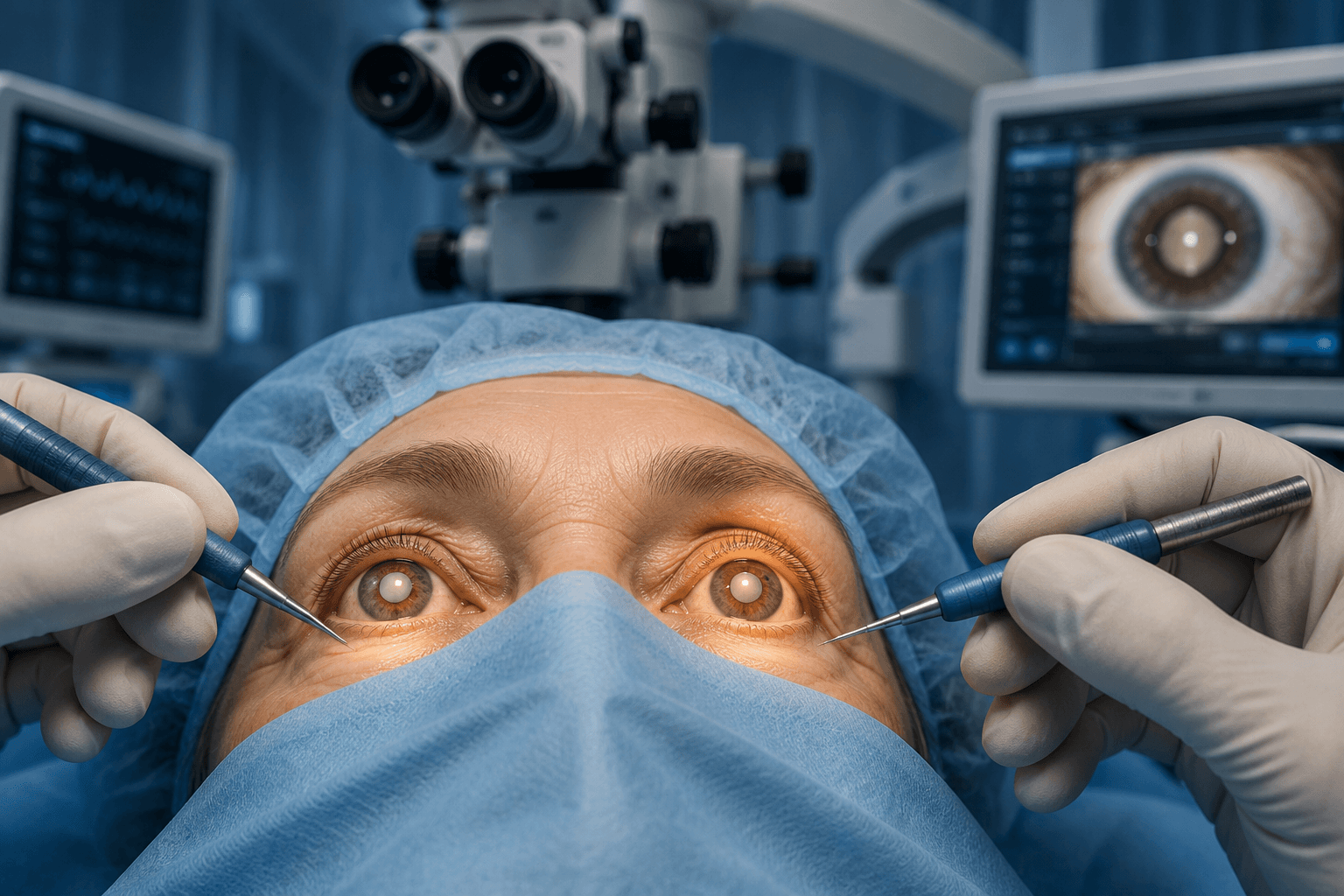
An intraocular lens (IOL) is an artificial lens implanted in your eye during cataract surgery, replacing your natural lens once it's become clouded. Made from clear, flexible materials, it stays in your eye permanently. Which IOL you choose has a major influence on your vision afterwards — and on whether you'll still need glasses.
The Main Lens Types
Monofocal
A single, fixed focus point, usually optimised for clear distance vision. Reading glasses are typically still needed for close work.
Multifocal
Built-in zones for near, intermediate and far vision, aiming to reduce glasses dependence at every distance.
Extended Depth of Focus (EDOF)
A continuous range of clear vision from far to intermediate distance, with fewer visual side effects than multifocal lenses.
Toric
Corrects pre-existing corneal astigmatism, and can be combined with monofocal, multifocal or EDOF optics.
Side-by-Side Comparison
| Monofocal | Multifocal | EDOF | Toric | |
|---|---|---|---|---|
| Distance vision | Excellent | Good | Excellent | Depends on base lens |
| Intermediate vision (screens) | Glasses usually needed | Good | Excellent | Depends on base lens |
| Near vision (reading) | Glasses needed | Good | Glasses sometimes needed | Depends on base lens |
| Night glare/halo risk | Low | Moderate | Low | Low |
| Typically covered by Medicare? | Yes | No — premium upgrade | No — premium upgrade | No — premium upgrade |
Not sure which lens suits your eyes?
A comprehensive assessment can match the right lens to your astigmatism, lifestyle and budget.
How to Choose the Right Lens
Daily Activities & Lifestyle
Frequent or night drivers may prefer lenses with less glare; heavy screen or reading users benefit from stronger intermediate/near vision.
Your Eye Health
Astigmatism, dry eye, or retinal and optic nerve conditions can all affect which lens type is suitable and how much benefit it will provide.
Visual Goals
Some patients want maximum glasses independence; others are happy with reading glasses if it means simpler, lower-risk surgery.
Budget & Insurance
Monofocal lenses are typically covered by Medicare and private health insurance; multifocal, EDOF and toric lenses are usually a premium, out-of-pocket upgrade.
Discuss costs early
Conclusion
There's no single “best” lens — only the best lens for your eyes, lifestyle and goals. Monofocal lenses remain a reliable, well-covered default, while multifocal, EDOF and toric options can meaningfully reduce glasses dependence for the right candidate. A thorough pre-surgery assessment is the best way to find your match.
Frequently Asked Questions
Intraocular lenses are designed to last a lifetime. They're made from durable materials that don't typically degrade or need replacement.

Written by
Dr Parth ShahDr Parth Shah is a leading Canberra ophthalmologist specialising in cataract and strabismus surgery, known for clear, patient-first guidance on lens choice.
Medical disclaimer: This article is for educational purposes only and does not constitute medical advice, diagnosis, or treatment. Always consult a qualified ophthalmologist or healthcare professional regarding any eye condition or before making any healthcare decisions. Read our full disclaimer.
Ready to discuss your lens options?
Book a consultation to find the lens that best matches your eyes and lifestyle.