The Critical Window of Visual Development
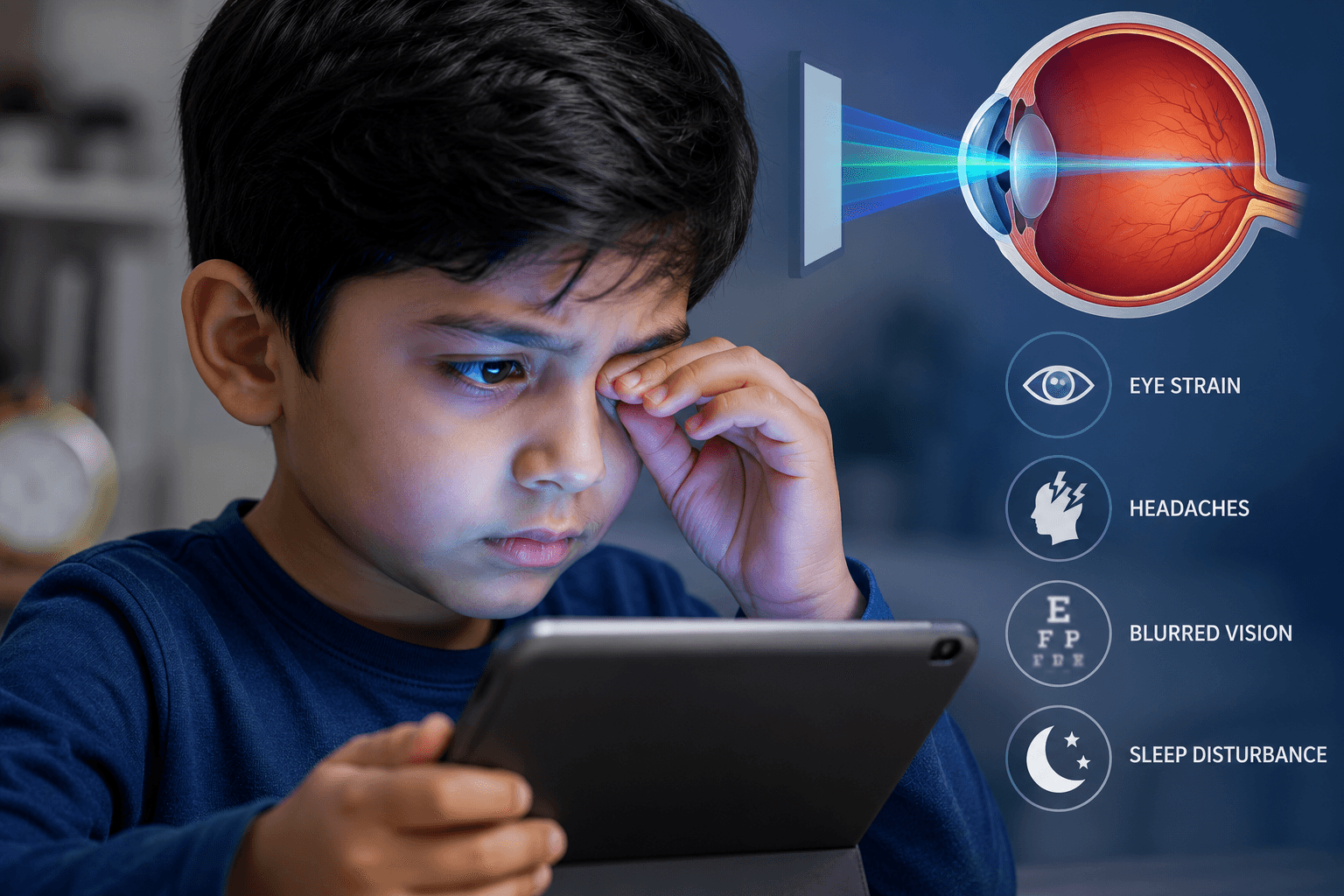
At birth, the visual system is anatomically present but functionally immature. Visual acuity in a newborn is approximately 6/200 — enough to detect light and movement, but far from the detailed vision of an adult. Over the first seven to eight years of life, visual experience shapes the connections within the visual cortex, progressively improving acuity, contrast sensitivity, depth perception, and colour discrimination.
This period — known as the critical period— is defined by neuroplasticity: the brain’s ability to reorganise and strengthen visual pathways in response to the input it receives. If that input is clear and equal from both eyes, vision develops normally. If it is degraded — by a cataract, a squint, or an uncorrected refractive error — the brain reduces its reliance on the affected eye, causing amblyopia.
Once the critical period closes, these connections become largely fixed. Amblyopia that was not treated during the window is significantly harder to reverse, and in some cases, the loss is permanent. This is why timing is everything in paediatric eye care.
1 in 50
Children with undetected amblyopia at school entry
75%+
Improvement rate with treatment started before age 5
7–8 years
Approximate end of the critical developmental period
Recommended Eye Examination Schedule
There is no single nationally mandated schedule for paediatric eye screening in Australia, but the following represents current best-practice guidance:
Newborn (before hospital discharge)
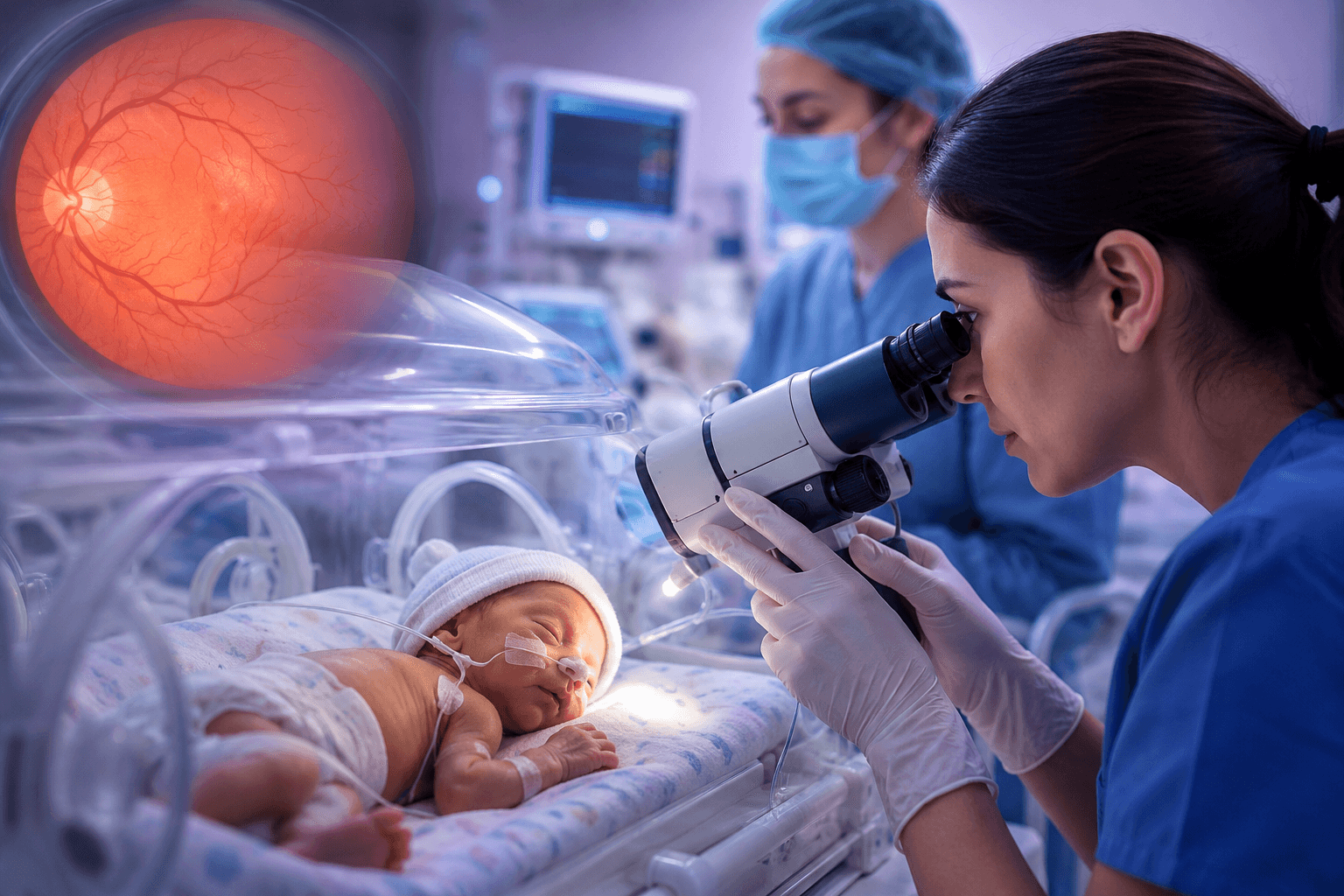
Red reflex examination by a paediatrician or neonatologist. An absent or asymmetric reflex requires urgent ophthalmology referral to exclude congenital cataract and retinoblastoma.
6–12 Months
Paediatric ophthalmology review for high-risk children: family history of congenital cataract, strabismus, amblyopia, or high refractive error. Also for any infant with abnormal visual behaviour or a parental concern.
3–4 Years (Before School Entry)
A formal vision assessment before starting school is the most important opportunity to detect amblyopia, strabismus and significant refractive errors. Many children with amblyopia are first identified at this age.
School Age and Beyond
Regular eye checks every one to two years during primary school. Earlier reassessment if any parental or teacher concern arises, the child fails a school vision screen, or symptoms of visual difficulty emerge.
What a Paediatric Ophthalmologist Checks
A comprehensive paediatric ophthalmology assessment is substantially more thorough than a school vision screen:
- Red reflex— examining the fundal reflection for asymmetry, which may indicate cataract, retinoblastoma, or retinal detachment.
- Corneal light reflex and cover test — detecting and quantifying strabismus (eye misalignment).
- Ocular motility— assessing the full range of movement of each eye.
- Cycloplegic refraction— using dilating drops to accurately measure the true refractive error, unmasking hyperopia that children otherwise compensate for by over-focusing.
- Slit lamp examination— detailed assessment of the cornea, anterior chamber, iris and lens.
- Fundus examination— examining the optic disc, macula and peripheral retina.
- Age-appropriate visual acuity testing — from preferential looking and Cardiff cards in infants, to picture charts in toddlers, to Snellen and LogMAR charts in school-age children.
Ready to book a paediatric eye assessment?
Dr Parth Shah offers comprehensive paediatric ophthalmology assessments in Canberra for children of all ages.
When Should a Child Be Referred to a Paediatric Ophthalmologist?
A referral from your GP or optometrist is appropriate for any of the following
- • Failed newborn red reflex test — urgent, same week
- • Any white pupil (leukocoria) at any age — urgent
- • Squint noticed by a parent, carer or GP — within weeks
- • Failure to fix and follow by 6–8 weeks of age
- • Failed school or community vision screen
- • Nystagmus or abnormal eye movements
- • Family history of congenital cataract, retinoblastoma or significant early-onset refractive error
- • Any parental concern about a child’s vision that is not resolved by a standard optometry review
A referral is never “unnecessary” when a parent has a concern. Paediatric ophthalmology is a subspecialty focused on exactly these scenarios, and the benefit of an early assessment — when treatment is most effective — far outweighs the inconvenience of a review that finds no problem.
Frequently Asked Questions
The red reflex test performed by a GP or paediatrician is a useful screen but is not equivalent to a comprehensive ophthalmology examination. It can detect dense cataracts and significant retinal pathology, but will miss subtle cataracts, strabismus, significant refractive errors, and amblyopia. If any concern exists — regardless of the red reflex result — referral to an ophthalmologist is appropriate.

Written by
Dr Parth ShahDr Parth Shah is a subspecialty-trained Canberra ophthalmologist with expertise in cataract surgery, paediatric eye care and strabismus surgery.
Medical disclaimer: This article is for educational purposes only and does not constitute medical advice, diagnosis, or treatment. Always consult a qualified ophthalmologist or healthcare professional regarding any eye condition or before making any healthcare decisions. Read our full disclaimer.
Early is always better
Book a paediatric eye assessment for your child and gain confidence that their vision is developing as it should.