Who Gets Adult Strabismus?
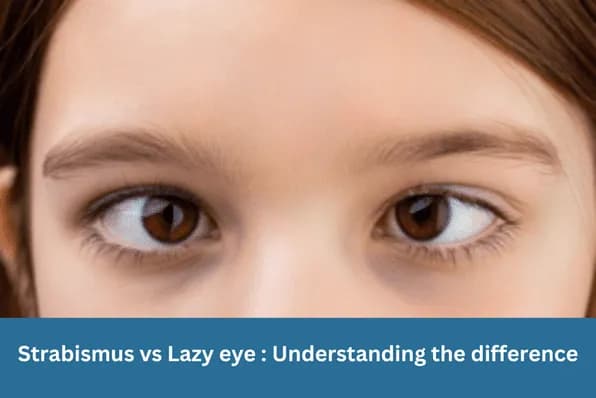
Strabismus is often thought of as a childhood condition, but a significant proportion of adults live with some degree of misalignment. There are two broad groups:
- Decompensated childhood strabismus— a squint that was present in childhood but compensated for by the brain, and which breaks down in adulthood. Triggers include stress, illness, trauma, or simply the reduced fusional reserves that come with age.
- New-onset adult strabismus— a misalignment that develops for the first time in adulthood, typically from a neurological, systemic, or orbital cause. This group requires careful investigation to identify the underlying condition.
Adults who develop strabismus rarely develop amblyopia (lazy eye), since the visual system is already fully mature. Instead, the dominant symptom is diplopia — double vision — which can be disabling and significantly affect quality of life.
Causes of New-Onset Adult Strabismus
When strabismus develops for the first time in an adult, identifying the cause is essential. Common causes include:
- Third nerve palsy— causes the eye to deviate outward and downward, often with a drooping eyelid and dilated pupil. A compressive lesion such as an intracranial aneurysm must be excluded urgently with imaging.
- Fourth nerve palsy (superior oblique)— the most common cause of isolated vertical diplopia in adults. Often follows head trauma. Patients adopt a characteristic head tilt to compensate.
- Sixth nerve palsy (lateral rectus)— causes an inward deviation with inability to abduct the eye. Frequently caused by microvascular disease from hypertension or diabetes; most cases recover within three to six months.
- Thyroid eye disease— fibrosis and enlargement of the extraocular muscles, most commonly the inferior rectus, causes a restrictive strabismus with vertical diplopia. Surgery on the orbit or muscles is deferred until the inflammatory phase is stable.
- Myasthenia gravis— a neuromuscular junction disorder causing variable, fatigable diplopia that fluctuates through the day.
- Decompensated phoria— a previously controlled tendency to misalign that loses compensation due to illness, fatigue, or presbyopia.
New diplopia warrants prompt assessment
Symptoms and Psychosocial Impact
The most common and disabling symptom of adult strabismus is diplopia. Depending on the cause and angle, patients may also experience:
- • Diplopia — double vision, often worse in certain gaze directions
- • Asthenopia — eye strain and headaches from the effort of maintaining fusion
- • Abnormal head posture to reduce diplopia (e.g. head tilt in 4th nerve palsy)
- • Loss of depth perception and stereopsis
- • Visible misalignment causing social self-consciousness
Research consistently documents the significant psychosocial burden of adult strabismus. Patients report difficulty in job interviews, social interactions, and personal relationships. Many feel that others perceive them as less intelligent or trustworthy. These are real and valid reasons to seek treatment, quite apart from the functional impact of diplopia.
Childhood vs Adult Strabismus
| Childhood Strabismus | Adult Strabismus | |
|---|---|---|
| Amblyopia (lazy eye) | Common — the brain suppresses the deviating eye during visual development | Rare — the adult visual system is fully developed and amblyopia does not form |
| Main complaint | Cosmetic appearance; amblyopia; rarely diplopia (suppression develops) | Diplopia (double vision) is usually the dominant and most disabling symptom |
| Binocular fusion | Suppression develops to avoid diplopia; binocular vision may be absent | No suppression; patient experiences frank double vision |
| Adjustable suture technique | Less useful — child cannot cooperate with awake adjustment | Very useful — patient can report alignment while awake post-operatively |
| Surgical goal | Alignment, amblyopia treatment, and development of binocular vision | Elimination of diplopia, restoration of binocular field, and cosmetic alignment |
Experiencing double vision or a noticeable eye turn?
An assessment with Dr Parth Shah can identify the cause and outline the most appropriate treatment for your situation.
Treatment Options
Treatment depends on the underlying cause, the size of the deviation, the degree of diplopia, and whether binocular vision can be re-established. Options include:
- Prism glasses— prisms incorporated into spectacle lenses shift the image to neutralise the deviation. They are useful for small to moderate angles and are commonly used as a temporary or diagnostic measure while monitoring for spontaneous recovery.
- Botulinum toxin injection— injection into an extraocular muscle temporarily weakens it, allowing the eye to drift to a more aligned position. Particularly useful for acute-onset nerve palsies in the early phase, and for small residual deviations. The effect may be temporary or, in some cases, prolonged.
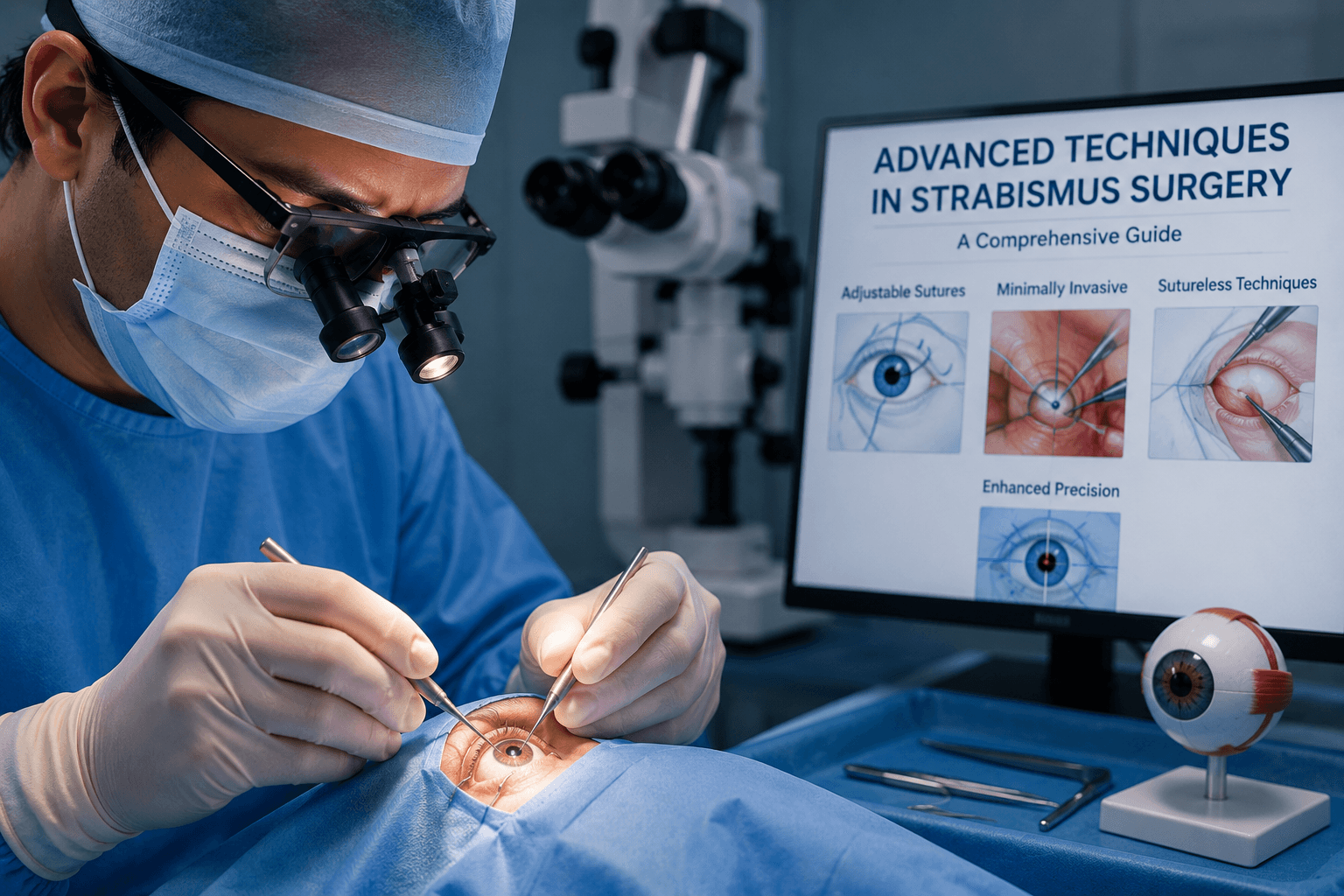
- Strabismus surgery— the most definitive treatment for most persistent deviations. The surgeon recesses (weakens) or resects (strengthens) one or more extraocular muscles to rebalance the eye position. Adjustable suture techniques are especially valuable in adults, since the patient can be examined awake the day after surgery and the suture adjusted under topical anaesthesia to optimise alignment.
Amblyopia treatment is rarely relevant in adults
For nerve palsies caused by microvascular disease (hypertension, diabetes), a period of observation of six to twelve months is usually recommended first, as many recover spontaneously. Prisms provide functional relief during this waiting period.
Conclusion
Adult strabismus is more common than many people realise and carries a real burden — both the functional problem of double vision and the psychosocial impact of visible misalignment. The good news is that effective treatments exist. Whether the right approach is prisms, botulinum toxin, or surgery depends on the cause, angle, and individual circumstances — a thorough assessment is the first step to finding the best path forward.
Frequently Asked Questions
Yes. Surgery is the most definitive treatment for adult strabismus and can achieve excellent alignment in the majority of patients. Adjustable suture techniques are particularly useful in adults because the patient can be awake during the post-operative adjustment, allowing fine-tuning of eye position before the suture is permanently secured.

Written by
Dr Parth ShahDr Parth Shah is a subspecialty-trained Canberra ophthalmologist with expertise in strabismus surgery, paediatric eye care and cataract surgery.
Medical disclaimer: This article is for educational purposes only and does not constitute medical advice, diagnosis, or treatment. Always consult a qualified ophthalmologist or healthcare professional regarding any eye condition or before making any healthcare decisions. Read our full disclaimer.
Ready to take the next step?
Book a consultation to discuss your strabismus and explore the treatment options that best suit your needs.