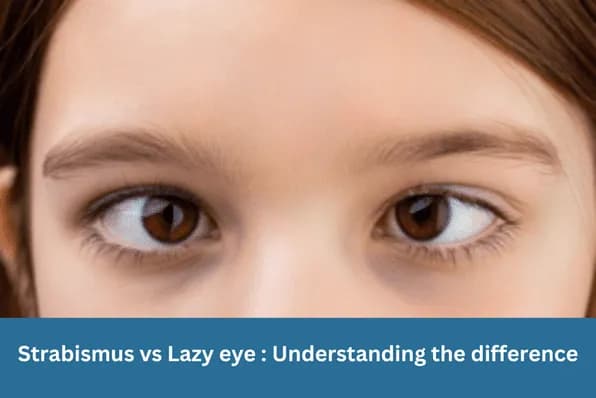
Overview: What Does Strabismus Surgery Involve?
Strabismus surgery involves operating on the six extraocular muscles that control each eye’s movement. By altering the attachment point or length of one or more muscles, the surgeon changes the forces acting on the globe and shifts the eye to a more aligned position.
The procedure is performed through a small opening in the conjunctiva (the clear membrane over the white of the eye). The eye itself is never removed. Most strabismus operations take between 30 and 90 minutes depending on the number of muscles involved and the complexity of the case.
30–90 min
Typical surgery duration depending on complexity
~20–30%
Patients who require a second procedure to refine alignment
~80%
Patients achieving satisfactory alignment after one operation
Core Surgical Techniques
Recession
The muscle is detached from its insertion point on the globe and reattached further back (posteriorly). This effectively lengthens the muscle’s functional path, reducing its pulling force and weakeningthe muscle. Recession is the most common procedure for overacting muscles — for example, medial rectus recession for esotropia (inward turn).
Resection
A segment of the muscle is removed and the shortened muscle reattached at its original insertion. This strengthensthe muscle by increasing its tension. Resection is used on the antagonist muscle to complement a recession on the opposite side — for example, lateral rectus resection combined with medial rectus recession for esotropia.
Faden Procedure (Posterior Fixation)
A suture is placed through the muscle and attached to the sclera well behind the equator of the eye. This selectively limits the muscle’s rotational effect in the field of gaze where it is the primary mover, without significantly changing alignment in primary position. It is used for special cases such as nystagmus with a null point and certain incomitant deviations.
Transposition Procedures
Used when a muscle is paralysed and cannot be directly strengthened (e.g. sixth nerve palsy with absent lateral rectus function). Adjacent muscles are moved (transposed) to take over the paralysed muscle’s role. The Knapp procedure, for example, transposes the medial and lateral rectus muscles vertically to treat double elevator palsy.
Minimally Invasive Strabismus Surgery (MISS)
MISS uses a smaller conjunctival incision than traditional approaches, reducing scarring, post-operative redness and discomfort, and speeding recovery. The technique is well-suited for single-muscle procedures in adults and for cases where preserving conjunctival tissue is important (e.g. prior filtering surgery for glaucoma).
Adjustable Sutures: A Key Technique for Adults
One of the most significant advances in adult strabismus surgery is the adjustable suture technique. Rather than tying the muscle permanently at the time of surgery, the surgeon leaves a slip-knot that can be adjusted post-operatively.
The process works as follows:
- 1. Surgery under general anaesthesia — the muscle is recessed or resected and attached with an adjustable slip-knot.
- 2. Next-day assessment — the patient attends the following day. With the eye numbed using topical anaesthetic drops, the surgeon assesses alignment with the patient awake and cooperative.
- 3. Adjustment — if the alignment is not ideal, the suture is loosened or tightened by a few millimetres to optimise the result. The patient can report whether diplopia is present in different gaze positions.
- 4. Permanent fixation — once alignment is satisfactory, the suture is permanently secured.
Adjustable sutures are not suitable for all patients
Considering strabismus surgery?
Dr Parth Shah can explain which surgical approach is best suited to your type of deviation and individual circumstances.
Botulinum Toxin as an Alternative or Adjunct
Botulinum toxin injected into an extraocular muscle temporarily weakens it, allowing the eye to drift toward a more aligned position. The effect typically lasts three to four months, though in some cases a more prolonged or even permanent result is achieved.
Botulinum toxin is particularly useful in the following scenarios:
- • Acute-onset nerve palsies — early injection can prevent contracture of the antagonist muscle while awaiting spontaneous recovery
- • Small-angle deviations where surgery may be disproportionate
- • Post-surgical overcorrection in the early period
- • Patients who are not suitable candidates for general anaesthesia
- • Diagnostic use — to predict the likely effect of surgery
Timing of Surgery
The ideal timing of strabismus surgery depends on the underlying cause:
- Infantile esotropia— surgery is typically recommended before 12 to 18 months of age to maximise the chance of developing binocular vision.
- Accommodative esotropia— surgery is considered only after the non-accommodative component has been confirmed and glasses optimised; the accommodative component is managed with spectacles.
- Nerve palsies from microvascular disease— a waiting period of six to twelve months is standard to allow spontaneous recovery; prisms manage diplopia in the interim.
- Thyroid eye disease— surgery is deferred until the inflammatory phase has been stable for at least six months.
- Intermittent exotropia— surgery is indicated when the exotropia becomes more frequent or harder to control, rather than at a fixed age.
Conclusion
Modern strabismus surgery offers a range of precise techniques that can be tailored to each patient’s specific deviation, cause, and goals. Whether through traditional recession and resection, adjustable sutures for adults, minimally invasive approaches, or botulinum toxin, the aim is always the same: to restore the best possible alignment and binocular function with a well-planned, individualised approach.
Frequently Asked Questions
This depends on the type and angle of the deviation. For straightforward horizontal strabismus, one or two muscles are typically addressed — commonly a recession of the medial rectus combined with a resection of the lateral rectus. Complex or large-angle deviations may require operating on three or four muscles, sometimes across both eyes.

Written by
Dr Parth ShahDr Parth Shah is a subspecialty-trained Canberra ophthalmologist with expertise in strabismus surgery, paediatric eye care and cataract surgery.
Medical disclaimer: This article is for educational purposes only and does not constitute medical advice, diagnosis, or treatment. Always consult a qualified ophthalmologist or healthcare professional regarding any eye condition or before making any healthcare decisions. Read our full disclaimer.
Ready to take the next step?
Book a consultation to discuss the surgical options best suited to your strabismus.