When Is Surgery Needed?
A pterygium is a benign, wedge-shaped growth on the white of the eye, often caused by prolonged sun, wind and dust exposure. Surgery becomes necessary when vision is compromised or threatened, the growth causes discomfort or redness, or for cosmetic reasons — removing the abnormal tissue and restoring the eye's natural appearance and function.
Before Surgery
You'll have a thorough examination beforehand, including an assessment of visual clarity and corneal involvement, tear film stability, and a review of your medical history and any current medications. You may be asked to stop blood thinners if recommended, apply prescribed drops beforehand, and arrange transport home after surgery.
During the Procedure
Anaesthesia
Eye numbing via anaesthetic drops or a local injection.
Tissue Removal
Careful removal of the pterygium from the sclera and cornea.
Graft Placement
A conjunctival autograft — healthy tissue from your own eye — is placed over the site.
Securing the Graft
Fine sutures or tissue adhesive secure the graft in place.
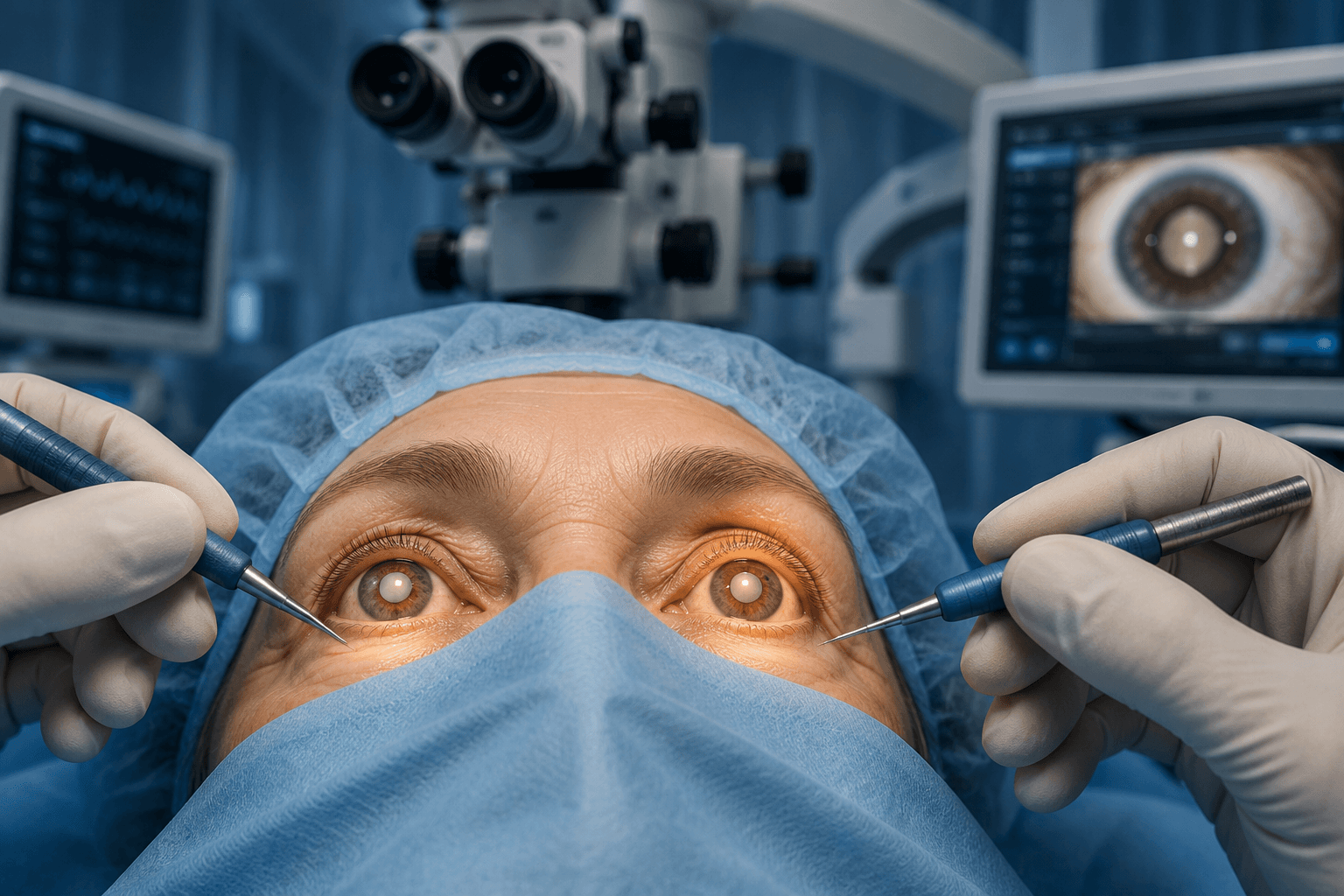
Performed as an outpatient procedure, the whole process takes around 30–45 minutes.
Is a pterygium affecting your vision or comfort?
A specialist assessment can confirm whether surgery is the right next step for you.
Recovery
1–2 Weeks
Until most normal activities resume
4–6 Weeks
For complete healing
3–5 Days
Typical time off work
Mild irritation, redness or tearing for several days is normal. You'll use antibiotic, anti-inflammatory and lubricating drops, and should avoid rubbing your eye, swimming, intense exercise and dusty environments while healing, along with wearing UV-blocking sunglasses outdoors.
Preventing Recurrence
Wear sunglasses or a wide-brimmed hat for UV protection
Keep your eyes moist with lubricating drops
Avoid dusty or windy conditions where possible
Attend all follow-up appointments
Modern techniques lower recurrence
Conclusion
Pterygium surgery is a well-established, low-risk procedure that restores both comfort and clear vision for most patients. With modern grafting techniques and good aftercare, recurrence is uncommon — and most people are back to their normal routine within a couple of weeks.
Frequently Asked Questions
No — local anaesthesia completely numbs the eye. You may feel slight pressure during surgery, but not pain. Mild discomfort afterwards responds well to prescribed drops.

Written by
Dr Parth ShahDr Parth Shah specialises in corneal and external eye diseases, with 10 years of surgical experience including pterygium removal.
Medical disclaimer: This article is for educational purposes only and does not constitute medical advice, diagnosis, or treatment. Always consult a qualified ophthalmologist or healthcare professional regarding any eye condition or before making any healthcare decisions. Read our full disclaimer.
Ready to discuss pterygium surgery?
Book a consultation to find out if surgery is right for you, and what to expect.