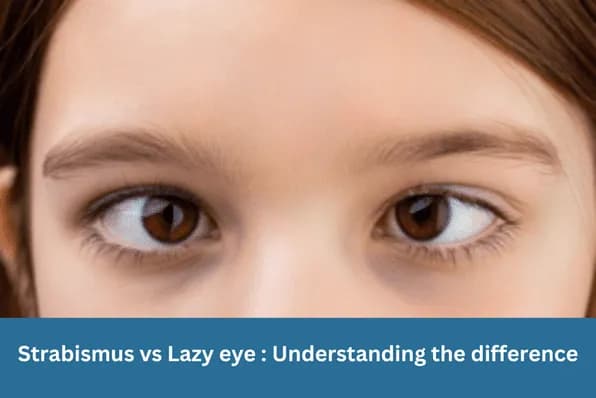
What Is Exotropia?
Exotropia is a divergent strabismus — a misalignment in which one or both eyes deviate outward (away from the nose). It is the second most common form of strabismus after esotropia, and the most common form to present in an intermittent pattern during childhood.
Unlike esotropia, where the brain readily suppresses the deviating eye to avoid diplopia, children with intermittent exotropia often use the eyes alternately — meaning amblyopia is less common. Vision in each eye is usually normal or near-normal, and the primary concern is the deterioration of binocular vision and stereopsis over time.
Types and Causes
Intermittent Exotropia
The most common paediatric form. The eye drifts outward when the child is tired, unwell, daydreaming, or in bright sunlight. The child often closes one eye in bright light — a highly characteristic sign. Between episodes, the eye appears completely straight and binocular vision is intact.
Constant Exotropia
The eye is deviated outward at all times. May evolve from untreated intermittent exotropia as fusional control breaks down, or may be present from early childhood. Amblyopia is a greater concern when the deviation is constant and one eye is consistently preferred.
Sensory Exotropia
Occurs secondary to poor vision in one eye from any cause — dense cataract, corneal scar, optic atrophy, or retinal disease. Without the drive to fuse, the poorly-seeing eye drifts outward over time.
Consecutive Exotropia
An outward deviation that develops following prior surgery for esotropia (usually an over-recession of the medial rectus). May require surgical revision.
Monitoring Intermittent Exotropia
For intermittent exotropia, regular monitoring is standard practice rather than immediate surgery. The key question at each review is: is control deteriorating?
Control is graded based on how frequently the eye is deviated and how quickly fusion is re-established after breaking fixation. Surgical intervention is considered when:
- • The deviation is present for more than half the child’s waking hours
- • Control is deteriorating at successive reviews
- • Stereopsis (depth perception) is measurably declining
- • The angle of deviation is large (typically ≥20 prism dioptres)
- • The child or parent reports increasing frequency of the eye drifting
Control grading guides timing
Intermittent vs Constant Exotropia
| Intermittent Exotropia | Constant Exotropia | |
|---|---|---|
| Frequency of deviation | Eye drifts out intermittently — when tired, daydreaming, or in bright light | Eye is deviated outward at all times |
| Amblyopia risk | Low — the eye is used normally most of the time; binocular vision is preserved during fusion | Moderate — if one eye is consistently preferred, the other may develop amblyopia |
| Control assessment | Graded 1–4 based on how often the eye is out and how quickly it recovers | N/A — deviation is constant by definition |
| Urgency of surgery | Surgery indicated when control deteriorates, angle increases, or stereopsis is threatened | Surgery generally recommended once the diagnosis is established and stable |
| Non-surgical options | Minus lenses, patching, convergence exercises may help delay or reduce need for surgery | Limited non-surgical options; prisms for adults awaiting surgery |
Concerned about your child’s outward eye drift?
Dr Parth Shah provides expert assessment of exotropia in children and adults, with clear guidance on monitoring and treatment timing.
Treatment
Treatment options range from conservative measures to surgery:
- Minus lenses— slight over-correction with minus (myopic) spectacles stimulates convergence and can reduce the frequency of the exotropia. Useful in the short term, particularly in young children awaiting surgery.
- Part-time patching— patching the non-deviating eye may disrupt suppression and improve binocular awareness, though evidence for long-term benefit is mixed.
- Convergence exercises— may strengthen fusional reserves in patients with convergence insufficiency exotropia.
- Surgery— lateral rectus recession (weakening) is the primary procedure. For unilateral cases, this is combined with medial rectus resection on the same eye. Bilateral lateral rectus recession is used for symmetric deviations. In adults, adjustable sutures improve precision of the result.
Conclusion
Exotropia is a common and manageable condition. The key to good outcomes is regular monitoring, awareness of control, and timely intervention when the deviation begins to affect binocular vision. Surgery is safe and effective, and most children achieve a good result. Long-term follow-up is important as some degree of drift may recur over years.
Frequently Asked Questions
Intermittent exotropia rarely resolves spontaneously. Most cases are stable or slowly worsen over time. Observation is reasonable when the deviation is well-controlled and infrequent, but deteriorating control — where the eye is out more often or fusion is harder to regain — is an indication to consider surgery. Your ophthalmologist will guide the timing based on regular monitoring of control.

Written by
Dr Parth ShahDr Parth Shah is a subspecialty-trained Canberra ophthalmologist with expertise in strabismus surgery, paediatric eye care and cataract surgery.
Medical disclaimer: This article is for educational purposes only and does not constitute medical advice, diagnosis, or treatment. Always consult a qualified ophthalmologist or healthcare professional regarding any eye condition or before making any healthcare decisions. Read our full disclaimer.
Ready to take the next step?
Book a consultation to assess the severity and control of the exotropia and plan the best path forward.