What Is Esotropia?
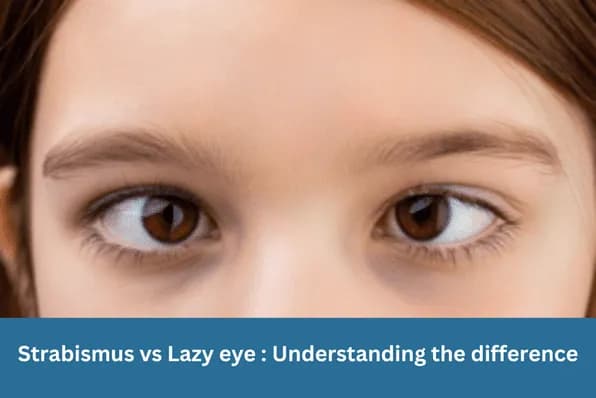
Esotropia is a type of strabismus in which one or both eyes turn inward (toward the nose). It is also called a convergent squint. The deviation may be constant or intermittent, affect one eye or alternate between eyes, and may be the same size in all directions of gaze (comitant) or vary with gaze direction (incomitant).
Diagnosis relies on the cover test — covering each eye in turn to detect movement — the prism cover test to measure the angle, and a cycloplegic refraction (using dilating drops to measure the full spectacle prescription, which is essential in children). The AC/A ratio (the amount of convergence driven per unit of accommodation) is measured when an accommodative component is suspected.
Types and Causes
Infantile Esotropia
Onset before six months of age with a typically large angle of deviation. It is not driven by a refractive error, and glasses do not correct the eye turn. Surgery is the primary treatment, usually recommended in the first one to two years of life to maximise the chance of developing binocular vision.
Accommodative Esotropia
This is the most common form in toddlers and young children. Long-sightedness (hyperopia) causes excessive accommodative effort to focus, which in turn drives excessive convergence. The eye turns inward when the child focuses, particularly on near objects. Prescription of the full hyperopic correction in spectacles frequently straightens the eye entirely, sometimes within days of starting to wear the glasses.
Partially Accommodative Esotropia
Some esotropias have both an accommodative component (corrected by glasses) and a non-accommodative component (not corrected by glasses). Spectacles reduce but do not eliminate the deviation, and surgery is recommended for the residual angle after a period of optimised spectacle wear.
Non-Accommodative Acquired Esotropia
Develops after infancy without a significant refractive cause. May represent a decompensated phoria, a neurological problem, or — in adults — a sixth nerve palsy. Careful investigation is warranted for new-onset esotropia in any adult.
Sensory Esotropia
Secondary to poor vision in one eye from any cause (cataract, corneal scar, retinal disease). Loss of the drive to fuse allows the eye to drift inward.
Amblyopia: A Critical Complication
Amblyopia (lazy eye) is reduced vision in one eye due to abnormal visual experience during development. It is common with esotropia because the brain suppresses the deviating eye to avoid double vision, and prolonged suppression impairs visual development in that eye.
Treatment of amblyopia takes priority over surgery for the squint. This involves:
- • Correcting any refractive error with spectacles
- • Patching the stronger eye for prescribed periods each day to force the amblyopic eye to work
- • Atropine drops as an alternative to patching in some cases
Treat amblyopia before surgery
Comparing the Types of Esotropia
| Infantile | Accommodative | Acquired / Adult | |
|---|---|---|---|
| Onset | Before 6 months of age | 6 months to 4 years | After 2 years, or adulthood |
| Driven by refractive error? | No — not related to long-sightedness | Yes — caused by high hyperopia (long-sightedness) | Variable — may or may not involve refractive error |
| Response to glasses | Glasses do not correct the deviation | Full hyperopic correction often straightens the eye completely | Partial response to glasses (partially accommodative) or none |
| Angle of deviation | Usually large (≥30 prism dioptres) | Variable — can be small or large | Small to moderate; may be intermittent initially |
| Primary treatment | Surgery — bilateral medial rectus recession | Full optical correction first; surgery for residual deviation | Investigate cause; prisms, patching, or surgery |
Concerned about your child’s eye turn?
Early assessment is the key to the best outcome. Dr Parth Shah provides comprehensive paediatric strabismus evaluations in Canberra.
Treatment
Treatment is tailored to the type and angle of esotropia:
- Spectacles— full correction of hyperopia is the first step for any accommodative component. Bifocal lenses address high AC/A ratio types where convergence excess is greater at near than at distance.
- Patching for amblyopia— prescribed before surgical intervention is considered.
- Surgery— bilateral medial rectus recession for symmetric deviations; medial rectus recession combined with lateral rectus resection for unilateral cases. The surgical dose is calculated from the measured angle. In adults, adjustable sutures improve precision.
- Prism glasses— used in adults when surgery is not appropriate, or as a bridge while awaiting surgery.
Conclusion
Esotropia is a common and treatable condition. Early diagnosis matters because amblyopia can develop quickly in young children, and effective treatment requires addressing the refractive error, the amblyopia, and the misalignment in the right order. Spectacles alone suffice for many accommodative cases; surgery is reserved for cases where the deviation persists despite optimal optical correction.
Frequently Asked Questions
It depends entirely on the type. Accommodative esotropia caused by long-sightedness often responds completely to spectacles, meaning surgery may not be required at all. Infantile esotropia, however, does not respond to glasses and almost always requires surgery. A thorough assessment including cycloplegic refraction (drops to measure the true spectacle prescription) is the first step.

Written by
Dr Parth ShahDr Parth Shah is a subspecialty-trained Canberra ophthalmologist with expertise in strabismus surgery, paediatric eye care and cataract surgery.
Medical disclaimer: This article is for educational purposes only and does not constitute medical advice, diagnosis, or treatment. Always consult a qualified ophthalmologist or healthcare professional regarding any eye condition or before making any healthcare decisions. Read our full disclaimer.
Ready to take the next step?
Book a consultation to assess the type and cause of the esotropia and plan the right treatment.