Why Refractive Errors Matter
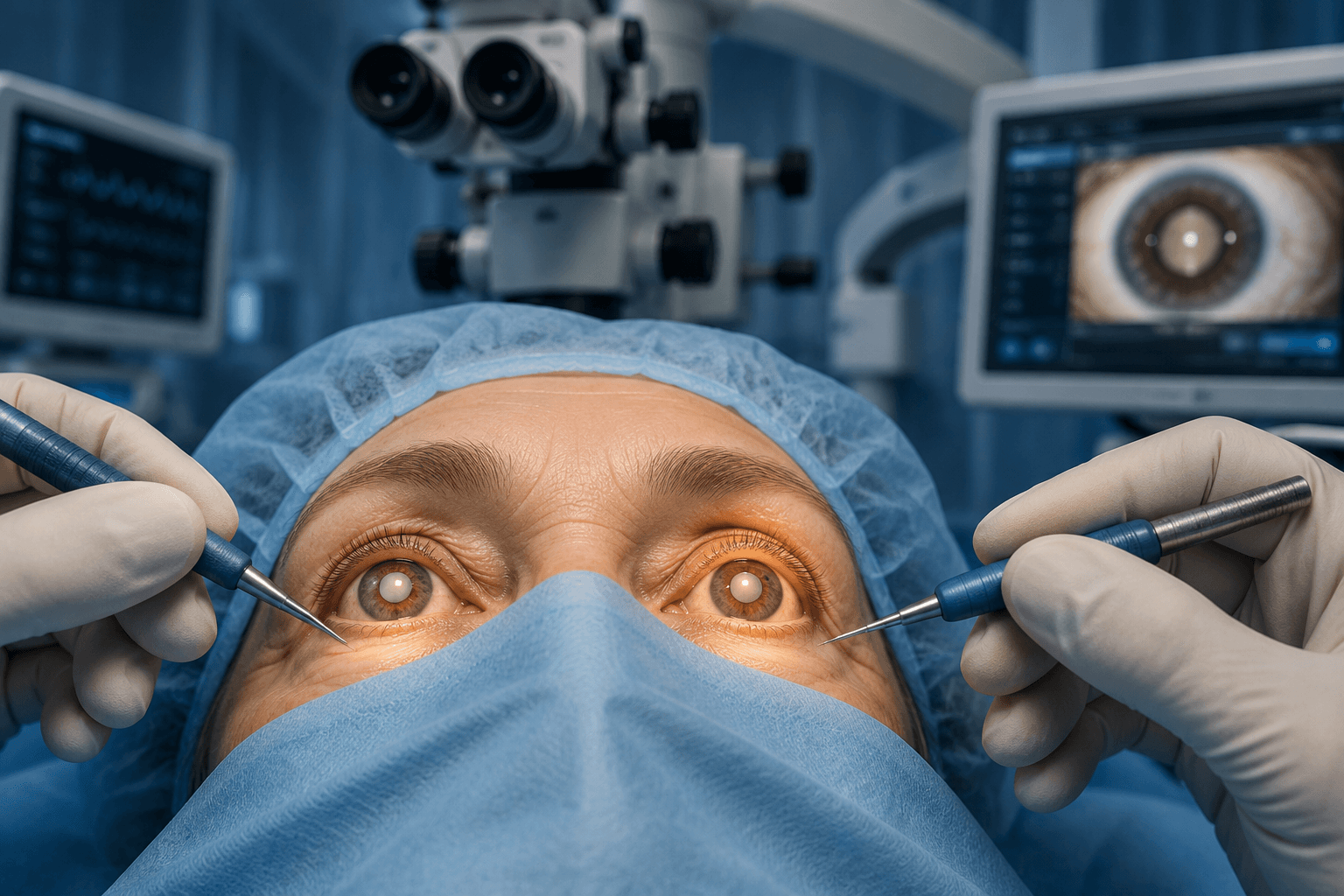
Cataract surgery removes the cloudy natural lens and replaces it with an artificial intraocular lens, which can correct refractive errors at the same time. But the eye's shape, length and focusing ability vary significantly by refractive status: myopic eyes tend to be elongated and more fragile, hyperopic eyes are shorter and more compact, and astigmatic eyes have uneven corneal curvature. These anatomical differences require customised surgical planning and precise measurements.
High Myopia (Severe Short-Sightedness)
High myopia develops when the eyeball is longer than normal, and cataracts often develop earlier in these patients.
Challenges: increased risk of retinal tears or detachment, thinner or weaker posterior eye tissues, more complex lens power calculations, and more pronounced night glare or haloes.
Safety measures: premium biometry for accurate axial length measurement, advanced IOL formulas designed for long eyes, comprehensive pre-operative retinal evaluation, and post-operative retinal health monitoring.
High Hyperopia (Severe Long-Sightedness)
High hyperopia involves a shorter, more compact eye, and cataracts significantly impact function even at earlier stages.
Challenges: a shallow anterior chamber that makes surgery more delicate, predisposition to angle-closure glaucoma, and demanding lens power calculations.
Benefits: hyperopic patients often experience one of the most dramatic improvements after cataract surgery, and the deeper anterior chamber post-surgery can reduce angle-related glaucoma risk.
Have a complex refractive history?
Even eyes considered 'high-risk' elsewhere can achieve excellent outcomes with the right planning.
Other Refractive Conditions
Astigmatism
Toric IOLs neutralise the eye's irregular curvature, delivering clearer, more stable vision across all activities.
Presbyopia & Post-LASIK Eyes
Age-related near-vision difficulty can be managed with EDoF or multifocal IOLs. Previous laser vision correction makes lens calculations more complex but is manageable with the right planning.
Recovery
24 Hours
Early vision improvement begins
1 Week
Comfort returns, routine tasks resume
1–3 Months
Stable, fully settled vision
Potential considerations
Conclusion
Cataract surgery offers substantial benefits for patients with high myopia, hyperopia or astigmatism. With individualised surgical planning and advanced technology, even eyes considered “high-risk” elsewhere can achieve excellent, reliable outcomes.
Frequently Asked Questions
Yes — premium IOL options like extended depth-of-focus or multifocal lenses can address both distance and near vision, depending on your eye health and lifestyle needs.

Written by
Dr Parth ShahDr Parth Shah is a leading Canberra ophthalmologist specialising in cataract surgery, including complex cases involving high refractive errors.
Medical disclaimer: This article is for educational purposes only and does not constitute medical advice, diagnosis, or treatment. Always consult a qualified ophthalmologist or healthcare professional regarding any eye condition or before making any healthcare decisions. Read our full disclaimer.
Have a high prescription or complex eye history?
Book a consultation to discuss your options for cataract surgery.