Five Common Causes
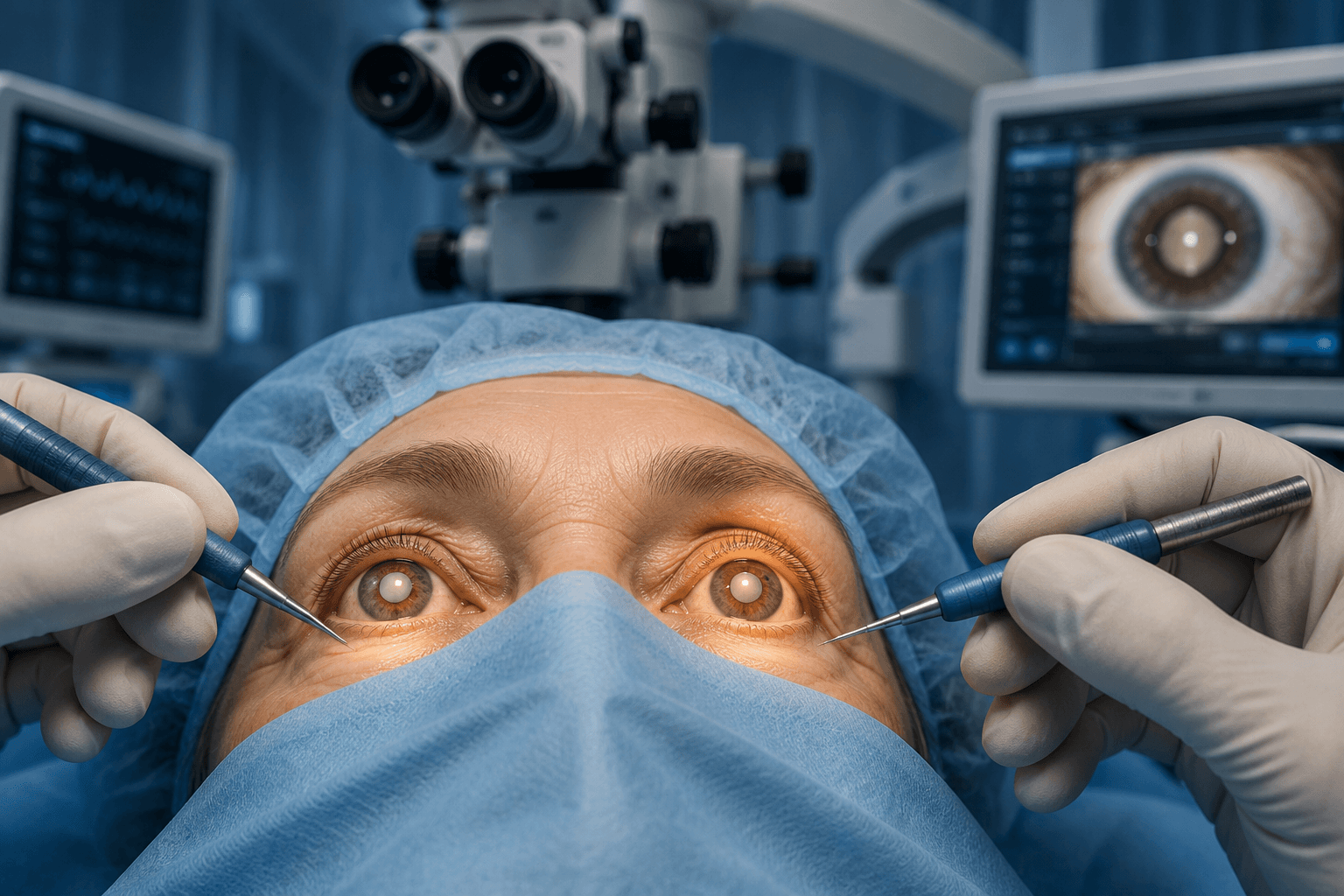
Cataract surgery is highly effective and widely performed, replacing a clouded natural lens with a clear artificial one. While recovery is usually smooth, some patients notice bloodshot eyes afterwards — typically a harmless temporary side effect.
Subconjunctival Haemorrhage
A tiny ruptured blood vessel creates a bright red patch on the white of the eye — it looks more serious than it feels, typically painless and harmless to vision.
Post-Surgical Inflammation
The eye naturally responds with mild inflammation, making blood vessels more visible. Anti-inflammatory drops address this.
Dry Eyes
Surgery can temporarily reduce tear production, leaving eyes feeling gritty, itchy and red, especially in the first weeks.
Reaction to Medicated Drops
Antibiotic and steroid drops, while essential for recovery, can occasionally cause mild surface irritation or redness.
Temporary Pressure Increase
Rarely, eye pressure rises after surgery, which can cause redness, discomfort or blurred vision requiring prompt evaluation.
Recovery Timeline
3–5 Days
Mild redness or slight pinkness
1–3 Weeks
Subconjunctival haemorrhage reabsorbs
1–2 Weeks
Inflammation-related redness, with drops
Days 1–3 typically bring mild redness, slight blurriness from swelling and light sensitivity. By days 4–7, redness starts fading and comfort improves. By weeks 2–3, most patients see significant reduction or resolution, with clearer vision and settling eye pressure. Beyond week 3, most patients have no redness at all — persistent or worsening redness at this stage warrants investigation.
Noticing redness after your cataract surgery?
Most cases are completely normal, but a quick check gives you peace of mind.
Supporting Your Recovery
Follow Your Eye Drop Schedule
Use prescribed antibiotic and steroid drops exactly as directed — missed doses can delay healing or increase infection risk.
Protect Your Eye
Wear the protective shield at night for the first week, and sunglasses outdoors for bright light and wind protection.
Avoid Rubbing Your Eye
Don't rub your eye even if it's itchy — this can disrupt healing and spread bacteria.
Rest and Avoid Strain
Avoid heavy lifting, prolonged bending or strenuous exercise in the first week.
Keep the Eye Area Clean
Wash your hands before touching your face, and keep soap or shampoo out of your eyes.
Warning Signs That Need Urgent Attention
Contact your eye specialist immediately if you notice:
Conclusion
Bloodshot eyes typically resolve within a few weeks and rarely need cause for concern. Following your aftercare instructions, protecting the eye, and attending your follow-up appointments lets your surgeon monitor healing and catch anything that needs closer attention.
Frequently Asked Questions
Yes — a subconjunctival haemorrhage often appears as a concentrated patch rather than redness across the whole eye, and is typically harmless and self-resolving.

Written by
Dr Parth ShahDr Parth Shah is director and principal ophthalmologist at Clarity Eye Surgeons, providing personalised cataract surgery aftercare and monitoring.
Medical disclaimer: This article is for educational purposes only and does not constitute medical advice, diagnosis, or treatment. Always consult a qualified ophthalmologist or healthcare professional regarding any eye condition or before making any healthcare decisions. Read our full disclaimer.
Have questions about your cataract surgery recovery?
Book a follow-up assessment for personalised reassurance and advice.