

Table of Contents
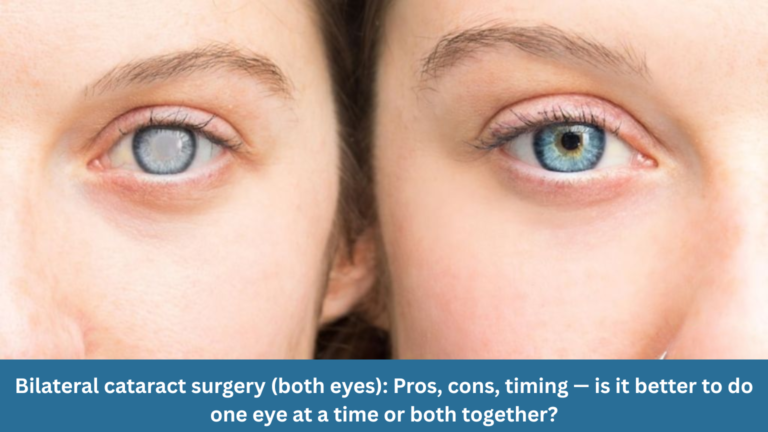
ToggleBilateral cataract surgery (both eyes): Pros, cons, timing — is it better to do one eye at a time or both together?
At Clarity Eye Surgeons in Canberra, Dr Parth Shah regularly advises patients on the safest and most effective approach to cataract surgery when both eyes are affected. While cataracts commonly develop in both eyes, the timing of surgery raises an important question:
Should cataract surgery be performed one eye at a time, or can both eyes be treated together?
With advances in surgical technique, infection control and lens technology, bilateral cataract surgery—either staged or same-day—has become an increasingly discussed option. However, the best approach depends on individual eye health, lifestyle needs and risk profile. Dr Parth Shah provides evidence-based guidance to help each patient make an informed and confident decision.
Understanding bilateral cataract surgery
Bilateral cataract surgery refers to operating on both eyes, either:
- Sequentially (one eye first, followed by the second eye days or weeks later), or
- Same-day bilateral cataract surgery (both eyes treated on the same day, one after the other, with strict sterile separation).
In all cases, the aim is to restore clear vision, improve visual balance and enhance overall quality of life. The key difference lies in timing and risk management.
Why timing matters in cataract surgery?
Vision relies on both eyes working together. When one eye is treated and the other still has a cataract, patients may experience:
- Temporary imbalance between the eyes.
- Reduced depth perception.
- Difficulty with reading, driving or screen use.
Timing decisions affect comfort, safety, recovery speed and final visual outcomes. This is particularly important for patients who drive regularly, work on computers or have active lifestyles.
Option 1: One eye at a time (staged bilateral cataract surgery)
This is the most common and traditionally preferred approach.
How does it work?
- One eye is operated on first.
- The second eye is treated after the first has healed. (usually 1–4 weeks later)
Advantages
- Allows the first eye to heal before proceeding.
- Enables refinement of IOL calculations for the second eye.
- Minimises risk of bilateral complications.
- Provides reassurance for cautious or high-risk eyes.
Considerations
- Temporary visual imbalance between surgeries.
- Two recovery periods instead of one.
- May require interim glasses or contact lens adjustments.
This approach is often recommended for patients with:
- High refractive errors.
- Glaucoma, macular degeneration or retinal disease.
- Previous eye surgery.
- Increased infection or healing risk.
Option 2: Same-day bilateral cataract surgery
In selected cases, both eyes can be safely operated on during the same visit, using completely separate sterile setups for each eye.
Advantages
- Faster overall visual rehabilitation.
- No period of uneven vision.
- Fewer clinic visits.
- Single recovery period.
- Quicker return to work and daily activities.
Considerations and risks
- Very small risk of bilateral infection. (extremely rare but serious)
- No opportunity to adjust IOL choice based on first-eye outcome.
- Not suitable for all patients.
At Clarity Eye Surgeons, same-day surgery is only considered for carefully selected patients following a comprehensive assessment and detailed discussion of risks and benefits.
Who may be suitable for same-day surgery?
Patients who may be considered include those who:
- Have healthy eyes with no significant comorbidities.
- Require similar IOL power in both eyes.
- Have stable corneal and retinal health.
- Understand and accept the risks involved.
Patients with complex refractive errors, retinal disease or narrow safety margins are generally advised to proceed one eye at a time.
Surgical experience and recovery
During surgery
- Local anaesthetic eye drops.
- No hospital admission required.
- Each eye is treated as a completely separate procedure.
- Surgery time: approximately 10 minutes per eye.
Recovery timeline
- 24–48 hours: Vision begins to improve.
- 1 week: Most daily activities resumed.
- 4–6 weeks: Vision stabilises.
- 3 months: Full healing.
Same-day patients experience a single recovery period, while staged patients recover in two phases.
Safety considerations
Cataract surgery is one of the safest procedures in medicine, but careful planning is essential—especially when operating on both eyes.
Potential risks include:
- Infection (very rare, but more significant if bilateral)
- Residual refractive error.
- Glare or haloes with premium lenses.
- Dry eye symptoms during healing.
Dr Parth Shah follows strict international safety protocols to minimise risk and ensure optimal outcomes.
Conclusion
Bilateral cataract surgery—whether staged or same-day—can deliver excellent visual outcomes when carefully planned. While same-day surgery offers convenience and faster rehabilitation for selected patients, operating one eye at a time remains the safest option for many, particularly those with complex eye conditions.
With advanced diagnostics, modern surgical techniques and patient-centred care, Clarity Eye Surgeons in Canberra ensure that every patient receives the most appropriate, safe and effective treatment plan. If you are considering cataract surgery in one or both eyes, book a consultation today to explore your options with confidence.
Author bio
Dr Parth Shah is a leading ophthalmologist in Canberra, specialising in cataract surgery. With extensive training and experience, he is renowned for his expertise in the field. Dr Parth Shah is dedicated not only to performing successful surgeries but also to patient education. His compassionate approach, combined with technical proficiency, has earned him the trust and gratitude of countless patients. He is a true advocate for eye health and a trusted name in the Canberra ophthalmology community.
FAQs
Yes. Some patients experience temporary visual confusion or eye strain as the brain adjusts to different clarity levels between eyes. This usually settles within days to weeks as neural adaptation occurs.
Yes. Final spectacle prescriptions are best issued after both eyes have fully healed, as visual balance between the eyes influences near and distance correction needs.
Patients living alone may need additional support during the first 24–48 hours after surgery, particularly with same-day bilateral procedures. Planning assistance in advance is important.
Temporary dry eye symptoms may feel more noticeable when both eyes are healing simultaneously, but this is usually short-lived and manageable with lubricating drops.
Absolutely. Patients who prefer to “test” their experience with the first eye often feel more comfortable choosing staged surgery, while others prefer completing treatment in one visit.
Night vision improvement depends on individual healing and IOL type rather than timing alone. However, same-day surgery may lead to more symmetrical night vision recovery.
Other blogs related to cataract surgery
Bilateral cataract surgery (both eyes): Pros, cons, timing — is it better to do one eye at a time or both together?
Table of Contents Toggle Introduction Symptoms of childhood cataracts Causes of cataract in children What Is Cataract Surgery in Children? What Are the Risks of
Cataract surgery for high myopia, high hyperopia and other refractive errors
Table of Contents Toggle What is Retinal Detachment? Causes of Retinal Detachment Symptoms of Retinal Detachment Diagnosis of retinal detachment Treatment Options for Retinal Detachment
Premium Intraocular Lenses (IOLs): Enhancing vision Post-Cataract surgery
Table of Contents Toggle Introduction Symptoms of childhood cataracts Causes of cataract in children What Is Cataract Surgery in Children? What Are the Risks of
Can you have cataract surgery in both eyes at the same time?
Table of Contents Toggle Introduction Symptoms of childhood cataracts Causes of cataract in children What Is Cataract Surgery in Children? What Are the Risks of
How long after cataract surgery can I see clearly?
Table of Contents Toggle Introduction Symptoms of childhood cataracts Causes of cataract in children What Is Cataract Surgery in Children? What Are the Risks of
Can cataracts grow back after surgery? Myths, facts, and what patients should know
Table of Contents Toggle Introduction Symptoms of childhood cataracts Causes of cataract in children What Is Cataract Surgery in Children? What Are the Risks of
Bloodshot eyes after cataract surgery: Causes, recovery, and when to seek help
Table of Contents Toggle Introduction Symptoms of childhood cataracts Causes of cataract in children What Is Cataract Surgery in Children? What Are the Risks of
What are the different types of lens for cataract Surgery?
Table of Contents Toggle Introduction Symptoms of childhood cataracts Causes of cataract in children What Is Cataract Surgery in Children? What Are the Risks of
What to know about posterior subcapsular cataracts?
Table of Contents Toggle Introduction Symptoms of childhood cataracts Causes of cataract in children What Is Cataract Surgery in Children? What Are the Risks of
What does vision look like with cataracts?
Table of Contents Toggle Introduction Symptoms of childhood cataracts Causes of cataract in children What Is Cataract Surgery in Children? What Are the Risks of
5 Essential Things to Know About Glasses After Cataract Surgery
Table of Contents Toggle Introduction Symptoms of childhood cataracts Causes of cataract in children What Is Cataract Surgery in Children? What Are the Risks of
Cortical cataracts: Symptoms, Causes, Treatment, and More
Table of Contents Toggle What are cortical cataracts? Symptoms of cortical cataracts Causes and Risk factors How are cortical cataracts diagnosed? Treatment options Recovery after
Laser vs Traditional cataract surgery: Which is better?
Table of Contents Toggle Introduction Symptoms of childhood cataracts Causes of cataract in children What Is Cataract Surgery in Children? What Are the Risks of
Cataract surgery & Aging: What seniors should know?
Table of Contents Toggle Introduction Symptoms of childhood cataracts Causes of cataract in children What Is Cataract Surgery in Children? What Are the Risks of
Cataract surgery and Aging: What patients should know
Table of Contents Toggle Introduction Symptoms of childhood cataracts Causes of cataract in children What Is Cataract Surgery in Children? What Are the Risks of
The impact of cataract surgery on night vision
Table of Contents Toggle Introduction Symptoms of childhood cataracts Causes of cataract in children What Is Cataract Surgery in Children? What Are the Risks of
Cataract surgery myths debunked
Table of Contents Toggle Myth 1: Cataracts must be “mature” before surgery Myth 2: Cataract surgery is painful Myth 3: Recovery takes a long time
Is Cataract Surgery Painful?
Table of Contents Toggle Introduction Symptoms of childhood cataracts Causes of cataract in children What Is Cataract Surgery in Children? What Are the Risks of

Everything about Cataracts & Surgery: A detailed guide
Table of Contents Toggle Introduction Symptoms of childhood cataracts Causes of cataract in children What Is Cataract Surgery in Children? What Are the Risks of
Choosing Your Path to Cataract Surgery: Private or Public Practice
Table of Contents Toggle Introduction Symptoms of childhood cataracts Causes of cataract in children What Is Cataract Surgery in Children? What Are the Risks of
A Comprehensive Guide to Choosing the Right Intraocular Lens (IOL) for Cataract Surgery
Table of Contents Toggle Introduction Symptoms of childhood cataracts Causes of cataract in children What Is Cataract Surgery in Children? What Are the Risks of
Cataract Surgery in Patients with Diabetes: A Comprehensive Guide
Table of Contents Toggle Introduction Symptoms of childhood cataracts Causes of cataract in children What Is Cataract Surgery in Children? What Are the Risks of

Driving With Cataract and After Cataract Surgery
Table of Contents Toggle Introduction Symptoms of childhood cataracts Causes of cataract in children What Is Cataract Surgery in Children? What Are the Risks of

Cataract Surgery in Patients with Glaucoma
Table of Contents Toggle Introduction Symptoms of childhood cataracts Causes of cataract in children What Is Cataract Surgery in Children? What Are the Risks of

The Complete Guide to Cataract Surgery Recovery: Timeline, Tips, and What to Expect
Table of Contents Toggle Introduction Symptoms of childhood cataracts Causes of cataract in children What Is Cataract Surgery in Children? What Are the Risks of
How to Choose a Cataract Surgeon: A Comprehensive Guide
Table of Contents Toggle Introduction Symptoms of childhood cataracts Causes of cataract in children What Is Cataract Surgery in Children? What Are the Risks of
Cataract Surgery in Children: Symptoms, Causes, Procedure, Risk and Recovery
Table of Contents Toggle Introduction Symptoms of childhood cataracts Causes of cataract in children What Is Cataract Surgery in Children? What Are the Risks of