
Table of Contents
ToggleToric IOLs for astigmatism: Do they really reduce the need for glasses after cataract surgery?
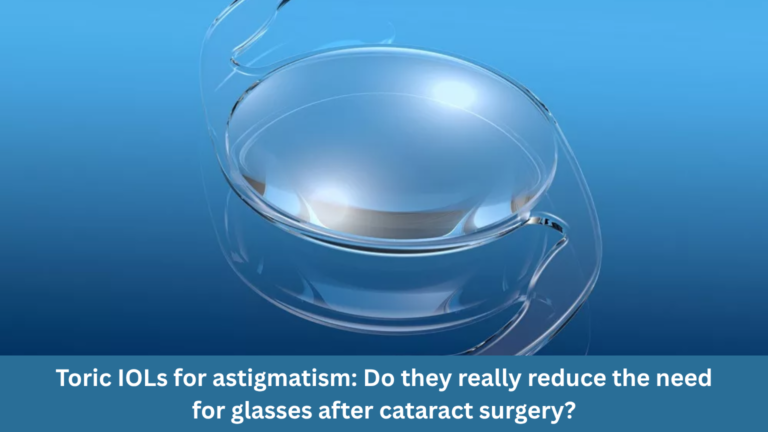
Cataract surgery today is not just about removing a cloudy lens — it’s an opportunity to improve overall vision quality. One of the most common questions patients ask is whether they can reduce or even eliminate their dependence on glasses after surgery.
If you have astigmatism, this is where toric intraocular lenses (IOLs) come into the conversation.
What is astigmatism and why does it matter?
Astigmatism occurs when the cornea is not perfectly round, causing light to focus unevenly on the retina. This leads to blurred or distorted vision at all distances.
Even after cataract removal, uncorrected astigmatism can still affect your vision, meaning you may continue to rely on glasses — especially for distance.
What are toric IOLs?
Toric IOLs are specially designed lenses used during cataract surgery to correct both:
- Cataracts (cloudy lens).
- Pre-existing corneal astigmatism.
Unlike standard monofocal lenses, toric IOLs have different powers in different meridians or planes, allowing them to neutralise the irregular curvature of the eye, and minimise post-operative astigmatism.
Considering Cataract Surgery with Astigmatism Correction?
Book a consultation with our experienced eye surgeons to learn whether Toric IOLs are the right choice for your vision needs.
Do toric IOLs reduce the need for glasses?
Yes — but not always completely
What the evidence shows:
- Patients with toric IOLs achieve better uncorrected distance vision compared to standard lenses.
- They are significantly more likely to be independent of glasses for distance vision.
- Residual astigmatism is lower after surgery, which is key to clearer vision without spectacles.
In many cases, patients achieve minimal residual astigmatism, allowing functional vision without glasses.
What kind of vision can you expect?
With toric IOLs, many patients experience:
- Clear distance vision without glasses.
- Reduced dependence on spectacles for everyday tasks like driving.
- Improved overall visual quality.
However, it’s important to set realistic expectations:
- You may still need reading glasses.
- Some patients may still require glasses for fine detail or prolonged screen use.
Why toric IOLs work better than older techniques to reduce astigmatism?
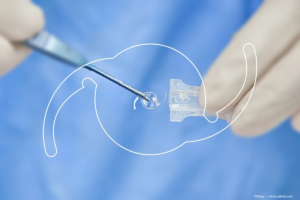
Previously, astigmatism during cataract surgery was managed using limbal relaxing incisions. (LRIs). These are planned partial-thickness incisions made in the cornea during cataract surgery.
While helpful, these methods are:
- Less predictable.
- Limited in the amount of correction they provide.
Toric IOLs are now considered the most precise and predictable way to correct astigmatism during cataract surgery.
Who is a good candidate?
Toric IOLs may be suitable if you:
- Have regular corneal astigmatism.
- Want to reduce reliance on glasses for distance.
- Are undergoing cataract surgery.
They may not be ideal if you have:
- Irregular astigmatism.
- Other eye conditions that limit your vision prognosis/potential post-operatively.
A detailed pre-operative assessment is essential to determine suitability.
Are there any limitations?
While toric IOLs are highly effective, they are not perfect:
- Precise alignment during surgery is critical.
- They are considered premium lenses and may involve additional costs.
- Outcomes depend on individual eye health and healing.
Small changes in astigmatism can also occur over time.
Conclusion
Choosing the right lens during cataract surgery is a highly personal decision. Toric IOLs offer a powerful solution for patients with astigmatism, but the best option depends on your lifestyle, expectations and eye health.
A thorough consultation with your ophthalmologist will help determine whether toric IOLs are the right choice for you.
If you’re considering cataract surgery and want to reduce your dependence on glasses, the experienced team at Clarity Eye Surgeons can guide you through your options with personalised advice and advanced treatment solutions. Book a consultation today to take the next step towards clearer, more comfortable vision.
Author bio
Dr Parth Shah is a leading ophthalmologist in Canberra, specialising in cataract surgery. With extensive training and experience, he is renowned for his expertise in the field. Dr Shah is dedicated not only to performing successful surgeries but also to patient education. His compassionate approach, combined with technical proficiency, has earned him the trust and gratitude of countless patients. He is a true advocate for eye health and a trusted name in the Canberra ophthalmology community.
FAQs
Astigmatism is detected during a comprehensive eye examination using specialised measurements of your cornea. Your ophthalmologist will assess both the amount and type of astigmatism before recommending the most suitable lens option.
Yes, toric IOLs can be implanted in one or both eyes, depending on your individual vision needs and the presence of astigmatism in each eye.
Most patients do not experience significant issues with glare or haloes from toric IOLs. In fact, by correcting astigmatism, these lenses may improve the clarity of night vision compared to standard lenses.
Toric IOLs need to remain in a specific position to correct astigmatism effectively. In rare cases where rotation occurs, a minor adjustment procedure may be required to reposition the lens.
Yes, some toric IOLs are available in combination with multifocal or extended depth-of-focus designs, offering both astigmatism correction and improved near or intermediate vision.
Most patients adapt within a few days to weeks. Vision typically stabilises as the eye heals, and the brain adjusts to clearer, more focused images.
Private health insurance may cover part of the cataract surgery, but toric IOLs are usually considered a premium upgrade, which may involve additional out-of-pocket costs.